

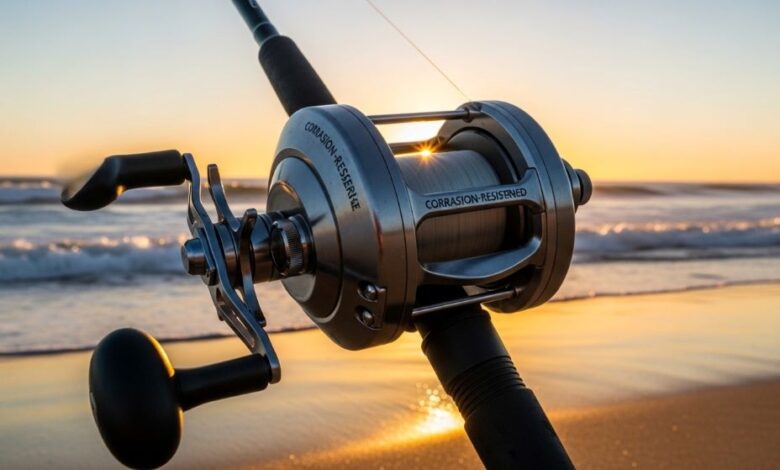
Surf fishing offers an exciting way to catch fish from the shoreline, but success depends heavily on having the right equipment. Your reel serves as the heart of your setup, working tirelessly against saltwater, sand, and powerful fish. Choosing the wrong reel can turn a promising fishing trip into a frustrating experience filled with tangles, breakages, and missed opportunities.
Beach anglers face unique challenges that require specialized equipment. The constant exposure to corrosive salt spray, the need for long-distance casting, and the battles with strong fish in turbulent waters all demand reels built for these conditions. This comprehensive guide will help you navigate the options and select a reel that matches your fishing style and target species.
Understanding what makes a quality surf reel different from other fishing reels will save you money and disappointment. We’ll explore the key features, materials, and specifications that matter most when fishing from the beach. By the end of this article, you’ll have the knowledge needed to make an informed decision that enhances your time on the water.
Understanding Surf Fishing Reel Basics
Surf fishing reels differ significantly from their freshwater counterparts. These specialized tools must withstand harsh saltwater environments while delivering the performance needed for long casts and powerful retrieves. Most beach anglers prefer spinning reels because they’re versatile, easy to use, and excel at casting lighter lures and baits long distances.
The primary advantage of spinning reels for surf fishing lies in their casting ability. Unlike conventional reels, spinning reels allow line to flow freely from the spool during the cast. This design reduces friction and enables you to achieve impressive distances even with moderate casting skills. Additionally, spinning reels handle lighter lines better, giving you more versatility in your presentations.
Size matters tremendously when selecting a surf reel. Manufacturers use numbering systems that indicate spool size and line capacity. For surf fishing, you’ll typically want reels in the 4000 to 8000 size range. Smaller reels work for lighter applications like pompano or whiting, while larger models handle the demands of striped bass, redfish, or small sharks.
Essential Features for Saltwater Durability
Saltwater creates a hostile environment for fishing equipment. The combination of salt, moisture, and sand works relentlessly to corrode metal components and degrade seals. Therefore, choosing a reel with proper saltwater protection is not optional but essential for longevity and reliable performance.
Look for reels with sealed or shielded bearings. These bearings have protective covers that prevent salt and sand from contaminating the bearing surfaces. Unsealed bearings will corrode quickly in beach environments, leading to rough operation and eventual failure. Quality reels often advertise their number of shielded bearings as a selling point.
Corrosion-resistant materials make a significant difference in reel lifespan. Aluminum bodies and spools resist rust better than graphite alternatives, though they add weight. Stainless steel components in critical areas like the bail wire and handle provide durability. However, even stainless steel benefits from regular cleaning and maintenance.
Modern surf casting gear often features waterproof drag systems. These sealed drags keep moisture and contaminants away from the drag washers, maintaining consistent performance throughout your fishing session. Traditional open drags can become sticky or lose smoothness when exposed to sand and salt spray.
Anti-reverse mechanisms prevent the handle from spinning backward when a fish pulls line. This feature is standard on most reels, but quality matters. A solid anti-reverse system ensures your hook sets are firm and prevents slack line that leads to lost fish. Instant anti-reverse designs engage immediately without any play or delay.
Determining the Right Size for Your Fishing Style
Selecting the appropriate reel size depends on several factors including your target species, casting distance requirements, and line capacity needs. Matching your reel size to your fishing situation improves casting performance and fish-fighting capability.
For smaller species like pompano, croaker, or whiting, reels in the 4000 to 5000 size range provide adequate capacity without unnecessary weight. These reels typically hold 200 to 250 yards of 15-pound test monofilament, giving you plenty of line for most beach fishing situations. The lighter weight reduces fatigue during long casting sessions.
Medium-sized gamefish such as striped bass, redfish, or bluefish call for reels in the 6000 to 7000 range. These models offer increased line capacity and stronger drags to handle more powerful runs. They balance casting ability with fish-fighting power, making them the most versatile choice for beach anglers who target various species.
Large predators including big stripers, tarpon, or sharks require reels sized 8000 or larger. These heavy-duty models hold substantial amounts of line and feature drag systems capable of handling sustained pressure. However, the added weight and bulk make them less suitable for all-day casting when targeting smaller fish.
Consider the line capacity specifications carefully. Manufacturers list capacity for different line types and weights. Remember that braided line has a much smaller diameter than monofilament of the same breaking strength. Therefore, a reel rated for 300 yards of 20-pound mono might hold 600 yards or more of 20-pound braid.
Gear Ratio and Retrieve Speed Considerations
Gear ratio describes how many times the spool rotates for each turn of the handle. This specification directly affects your retrieve speed and influences which techniques work best with a particular reel. Understanding gear ratios helps you match your reel to your fishing approach.
Lower gear ratios, typically around 4.5:1 to 5.2:1, provide more cranking power with each handle turn. These ratios excel when you need to muscle fish away from structure or work heavy sinkers through strong currents. However, they retrieve line more slowly, which can be a disadvantage when you need to quickly pick up slack or keep up with a fish swimming toward you.
Medium gear ratios between 5.3:1 and 6.2:1 offer a balanced approach. They provide adequate power for most situations while maintaining reasonable retrieve speeds. Most beach anglers find this range most versatile for general surf fishing applications. These ratios work well whether you’re fishing bait on the bottom or retrieving lures through the surf.
High gear ratios above 6.2:1 prioritize speed over power. These fast-retrieve reels excel for techniques requiring quick line pickup, such as working topwater plugs or burning spoons through the wash. Additionally, they help you maintain tight lines when fish run toward you. However, they sacrifice some cranking power and can tire your arms more quickly when fighting large fish.
The retrieve rate, measured in inches per turn, provides another useful specification. This number tells you exactly how much line returns to the spool with each handle rotation. Two reels with the same gear ratio might have different retrieve rates if they have different spool diameters.
Drag System Performance and Adjustment
The drag system controls how much resistance a fish feels when pulling line from your reel. A smooth, reliable drag is crucial for landing fish without breaking your line. In surf fishing, where you often can’t follow a fish down the beach, having adequate drag capacity becomes even more important.
Front drag systems mount the drag mechanism on the top of the spool. This design typically offers more stopping power and smoother operation than rear drag alternatives. The larger drag washers in front drag systems dissipate heat better during long battles, maintaining consistent performance. Most serious beach anglers prefer front drag reels for these advantages.
Rear drag systems place the adjustment knob at the back of the reel body. While they generally offer less maximum drag than front systems, they’re easier to adjust while fighting a fish. Some anglers appreciate this convenience, especially when targeting species that make sudden powerful runs requiring quick drag adjustments.
Maximum drag capacity indicates how much stopping power the reel can deliver. For most surf fishing situations, you want at least 20 to 25 pounds of drag. Larger species may require 30 pounds or more. However, you’ll rarely use the maximum drag setting. Setting your drag too tight leads to broken lines and lost fish.
A good rule involves setting your drag to about 25 to 30 percent of your line’s breaking strength. This setting allows the drag to slip during powerful runs while maintaining enough pressure to tire the fish. Always test and adjust your drag before you start fishing, not when a fish is on the line.
Handle Design and Comfort Features
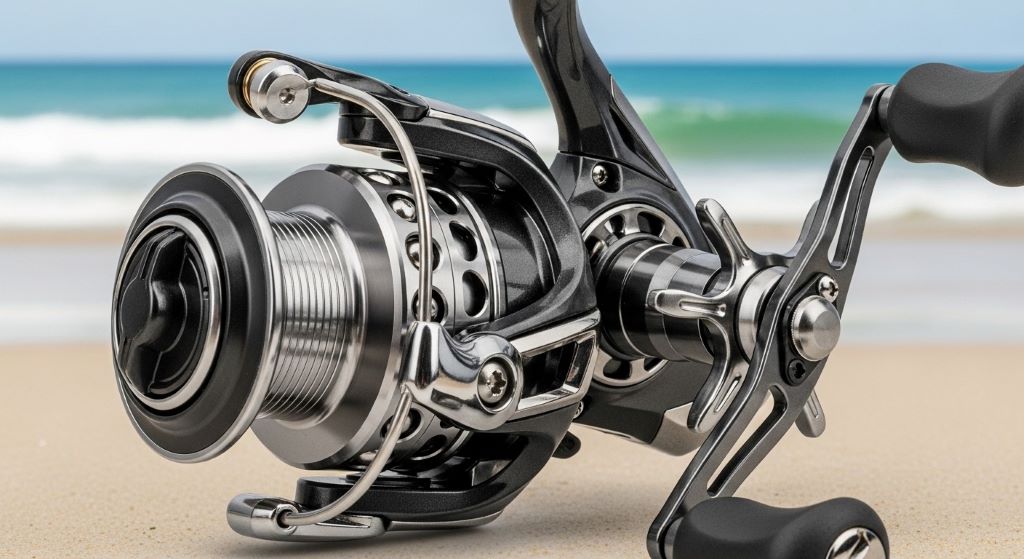
The handle represents your direct connection to the reel and significantly impacts fishing comfort. After casting and retrieving for hours, seemingly small design differences become major comfort factors. Choosing a handle style that matches your preferences reduces fatigue and improves your overall fishing experience.
Single handle reels offer less weight and create less wind resistance during casts. Many tournament casters prefer single handles for their aerodynamic benefits. However, they provide only one grip point, which some anglers find less comfortable during extended use.
Double handle configurations give you two opposing grip points. This design distributes pressure more evenly across your hand and provides better balance. Many beach anglers appreciate the improved comfort during long fishing sessions. The extra weight is minimal and rarely affects casting distance significantly.
Handle length affects leverage and cranking comfort. Longer handles provide more leverage, making it easier to retrieve heavy weights or battle strong fish. However, they’re bulkier and can interfere with casting. Shorter handles offer less leverage but create cleaner casting motion. Most surf reels come with medium-length handles that balance these considerations.
The handle knob material and shape influence grip comfort. Soft rubber or EVA foam knobs provide cushioning that reduces hand fatigue. Some knobs feature ergonomic shaping that fits your hand’s contours. In saltwater environments, materials that resist slipping when wet prove particularly valuable.
Line Capacity and Backing Considerations
Adequate line capacity gives you the security needed when fish make long runs. Running out of line during a battle is one of the most frustrating experiences in fishing. Understanding how much line you actually need helps you choose the right reel size.
For most beach fishing situations, 250 to 300 yards of line provides sufficient capacity. Typical surf fish rarely strip more than 100 yards during a run, but having extra capacity offers peace of mind. The additional line also lets you cut off worn sections without significantly reducing your usable line.
Braided line has become the preferred choice for many surf anglers. Its thin diameter allows you to spool more line onto the reel compared to monofilament of equal strength. Additionally, braid has virtually no stretch, improving your ability to feel bites and set hooks at long distances. However, its lack of stretch means you need a smoother drag system to absorb shock.
Using backing line lets you fill the spool properly without wasting expensive fishing line. Many anglers spool inexpensive monofilament as backing, then attach their main fishing line using a leader knot. This approach ensures the spool is filled to the optimal level for casting while reducing costs.
Proper spool fill affects casting distance dramatically. The spool should be filled to within about one-eighth inch of the spool lip. Too little line creates more friction during casts, reducing distance. Overfilling causes loops and tangles. Taking time to achieve proper spool fill pays dividends in casting performance.
Ball Bearing Count and Quality
Manufacturers often advertise bearing count as a key selling point. While more bearings generally improve smoothness, quality matters more than quantity. Understanding how bearings function helps you evaluate this specification properly.
Ball bearings reduce friction between moving parts, creating smoother operation. They’re located at critical stress points throughout the reel, including the main shaft, handle, and roller bearing. Each bearing allows its associated component to rotate more freely with less effort.
However, not all bearings are created equal. A reel with five high-quality shielded bearings will outperform one with ten unshielded or poorly manufactured bearings. Focus on whether the bearings are sealed or shielded to protect against saltwater intrusion. Quality bearings use better materials and tighter tolerances for improved longevity.
The roller bearing on the bail deserves special attention. This bearing guides line back onto the spool during retrieves. A smooth roller bearing prevents line twist and wear. Cheap reels often use bushings instead of bearings in this location, leading to increased friction and line damage.
Most quality saltwater spinning reel guide options feature between four and ten bearings. This range provides excellent smoothness without adding unnecessary complexity or cost. Beyond this number, additional bearings offer diminishing returns for most anglers.
Anti-Twist and Line Management Features
Line twist represents one of the most common frustrations in surf fishing. When line twists during casting or retrieving, it forms tangles and wind knots that weaken your line and waste fishing time. Modern reels incorporate several features to minimize these issues.
The oscillation system moves the spool up and down slightly during retrieves. This movement distributes line evenly across the spool, preventing line from building up in one area. Even line lay reduces the memory coils that cause tangles and improves casting performance.
A properly designed bail system closes smoothly and consistently. The bail wire should snap firmly into position without catching or hesitating. A bail that closes unevenly or requires multiple attempts to latch creates slack line and causes twists during the retrieve.
Line rollers should rotate freely under tension. A stuck or rough roller twists line as it passes over the roller during retrieves. Check this by pulling line through the guides while slowly turning the handle. The roller should spin smoothly without hesitation or grinding.
Spool design influences how line releases during casts. Tapered or double-tapered spools allow line to flow more smoothly off the spool lip. This design reduces friction and minimizes the line coils that lead to wind knots after the cast.
Budget Considerations and Value Assessment
Surf reels range from under fifty dollars to several hundred dollars. Understanding what you get at different price points helps you make smart purchasing decisions that balance performance with budget constraints.
Entry-level reels priced between fifty and one hundred dollars provide basic functionality. They work acceptably for occasional beach fishing but often lack the durability and features needed for regular use. Bearings may not be fully sealed, drag systems can be inconsistent, and materials may corrode more quickly.
Mid-range reels from one hundred to two hundred dollars represent the sweet spot for most beach anglers. These reels typically feature sealed bearings, corrosion-resistant materials, and reliable drag systems. They balance performance with affordability, providing years of service with proper maintenance. Many experienced anglers consider this range the best value.
Premium reels exceeding two hundred dollars offer the ultimate in performance and durability. They use the finest materials, most bearings, and most advanced engineering. However, the performance gains compared to mid-range options are incremental rather than revolutionary. These reels make sense for serious anglers who fish frequently or in particularly harsh conditions.
Additionally, consider the warranty and customer service reputation. A slightly more expensive reel from a company with excellent support can prove more economical than a cheaper option that fails and receives poor service. Research reviews and ask other anglers about their experiences with different manufacturers.
Maintenance Requirements for Longevity
Even the best reel will fail prematurely without proper care. Saltwater environments demand regular maintenance to protect your investment and ensure reliable performance. Fortunately, basic maintenance takes minimal time and extends reel life significantly.
Rinse your reel with fresh water after every saltwater fishing trip. Hold it under a gentle stream of water, avoiding direct high-pressure spray that can force water past seals. Focus on areas where salt accumulates, including the bail, handle, and drag adjustment knobs. Allow the reel to air dry completely before storage.
Periodically apply light oil to exposed moving parts. The bail pivot points, handle knob bearing, and roller bearing benefit from occasional lubrication. Use oils specifically designed for fishing reels, as general lubricants may not work well in saltwater environments or could attract dirt.
Open and clean your reel at least once per season, more often if you fish frequently. This service involves removing the spool, inspecting internal components, cleaning old grease, and re-lubricating gears. If you’re not comfortable doing this yourself, many tackle shops offer reel servicing at reasonable costs.
Replace your line regularly, especially after landing large fish or detecting wear. Inspect your line frequently for fraying, discoloration, or weak spots. Remember that sun exposure, salt, and sand all degrade fishing line over time.
Store reels in a cool, dry location away from direct sunlight. Loosen the drag slightly during storage to prevent drag washers from compressing and losing elasticity. Consider using reel covers to protect against dust and accidental impacts.
Making Your Final Selection
After considering all these factors, you’re ready to choose a reel. However, if possible, handle several options before buying. What looks perfect on paper might not feel right in your hands. Weight distribution, handle comfort, and overall feel vary significantly between brands and models.
Visit a tackle shop and handle reels in your price range. Turn the handle and feel how smoothly the reel operates. Work the drag adjustment and assess how easily it turns. If possible, test cast with different reels to see how they balance with your rod.
Read reviews from other beach anglers who have used the reels you’re considering. Pay particular attention to long-term reviews that discuss durability and performance after extended use. Online fishing forums provide valuable insights from experienced anglers who have no financial incentive to promote specific products.
Match your reel choice to your rod specifications. The combination should feel balanced, with neither end feeling too heavy. Your rod will have a recommended line weight range that should align with the line you plan to spool on your reel.
Remember that the best reel is the one you’ll enjoy using. A slightly less expensive model that feels great in your hands will serve you better than a technically superior reel that’s uncomfortable to use. Confidence in your equipment translates to better fishing performance.
Conclusion
Selecting the right surf fishing reel requires balancing numerous factors including size, features, durability, and budget. Beach anglers need reels specifically designed to handle saltwater environments while delivering the casting distance and fish-fighting power required for coastal fishing. Understanding the key specifications like gear ratio, drag capacity, and bearing quality helps you make informed decisions.
Most anglers will find their best value in mid-range reels that offer sealed bearings, corrosion-resistant materials, and reliable drag systems. These reels provide years of service with proper maintenance while keeping costs reasonable. Remember that even premium reels require regular cleaning and care to perform at their best in harsh beach environments.
Your choice should ultimately align with your target species, fishing frequency, and personal preferences. A reel that feels comfortable and inspires confidence will improve your fishing experience regardless of its technical specifications. Take time to research options, handle different models, and read reviews from experienced beach anglers.
Investing in quality surf casting gear pays dividends through reliable performance, fewer missed opportunities, and many seasons of enjoyable fishing. The knowledge you’ve gained from this saltwater spinning reel guide will help you select equipment that matches your needs and enhances your success on the beach. With the right reel properly maintained, you’ll be ready to tackle whatever the surf throws your way in 2026 and beyond.
Frequently Asked Questions
What size spinning reel is best for general surf fishing?
A 6000 to 7000 size reel works best for most surf fishing situations. This size range provides adequate line capacity for medium to large fish while remaining manageable for all-day casting. It holds enough line to handle powerful runs and offers sufficient drag power for species like striped bass, redfish, and bluefish without being excessively heavy or bulky.
How much should I spend on a surf fishing reel?
Plan to spend between one hundred and two hundred dollars for a quality surf reel that balances performance with value. This price range typically includes sealed bearings, corrosion-resistant materials, and reliable drag systems that will last for years with proper care. While cheaper reels exist, they often lack the durability needed for regular saltwater use.
Is braided line or monofilament better for surf fishing?
Braided line offers significant advantages for most surf fishing applications. Its thin diameter allows for greater line capacity and longer casts. The lack of stretch improves bite detection and hook-setting at distance. However, braid requires a quality drag system to absorb shock, and you’ll typically need a monofilament or fluorocarbon leader to reduce visibility near your bait or lure.
How often should I service my surf fishing reel?
Rinse your reel with fresh water after every saltwater trip. Perform a complete internal cleaning and re-lubrication at least once per season, or more frequently if you fish several times per month. Regular maintenance dramatically extends reel life and prevents the gradual performance degradation that occurs when salt and sand contaminate internal components.
Do I need a different reel for fishing with lures versus bait?
The same reel works well for both lure fishing and bait fishing from the beach. However, your preferred gear ratio might vary. Higher gear ratios around 6.0:1 or faster excel for techniques requiring quick retrieves, like working plugs or spoons. Lower gear ratios around 5.0:1 provide more power for working heavy sinkers with bait rigs but remain perfectly functional for lure fishing as well.
Related Topics:
Essential Seasonal Maintenance Checklist for Fishing Equipment
The Ultimate Guide to Untangling Multi-Hook Rigs for Pier Fishing Without the Headache