

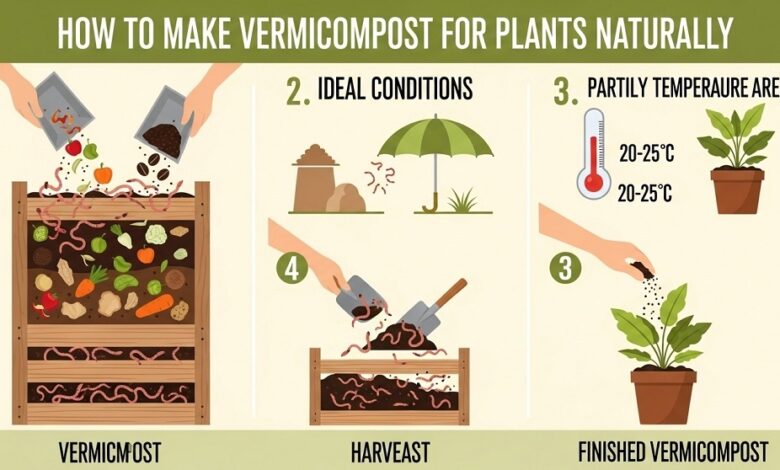
Vermicompost is a natural organic fertilizer made using earthworms to break down kitchen and garden waste into nutrient-rich compost for plants.
Most gardeners struggle with one simple problem: soil that looks fine but does not produce healthy plants. Leaves turn yellow. Growth stays slow. Chemical fertilizers give quick results, but they damage soil health over time.
This is where vermicomposting solves the problem.
Vermicompost is created when earthworms consume organic waste and convert it into a stable, humus-like material. According to studies published by the Indian Council of Agricultural Research (ICAR), vermicompost can increase plant growth by 20–30% compared to untreated soil.
If you are searching for how to make vermicompost naturally at home, the process is simple, affordable, and scalable. You do not need machines or chemicals. You need organic waste, earthworms, moisture, and patience.
This guide explains how to make vermicompost for plants step by step, using proven methods backed by real agricultural data and field use.
Why Should You Make Vermicompost Instead of Using Chemical Fertilizers?
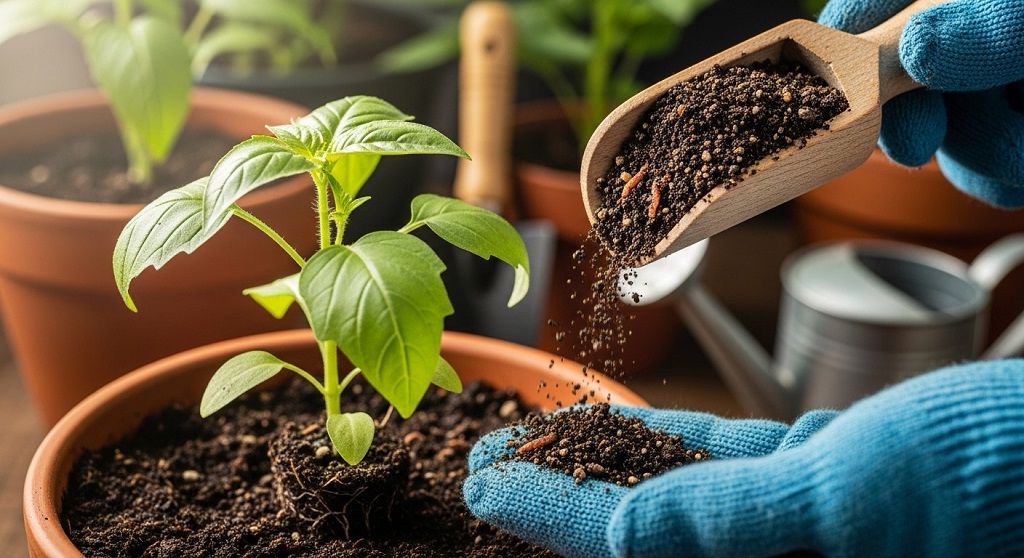
Snippet answer: Vermicompost improves soil structure, increases microbial activity, and provides slow-release nutrients without harming plants or soil.
Chemical fertilizers solve one problem but create another. They increase yield in the short term but reduce soil organic matter. Over time, soil becomes compact and less fertile.
Vermicompost works differently.
- Improves soil aeration and water retention
- Provides nitrogen, phosphorus, potassium, calcium, and magnesium
- Contains beneficial microbes and enzymes
- Does not burn plant roots
A case study from Tamil Nadu Agricultural University showed that tomato plants grown with vermicompost produced 18% higher yield than those grown with urea-based fertilizer.
This makes vermicomposting a long-term soil investment, not a temporary fix.
What Materials Are Needed to Make Vermicompost at Home?
Snippet answer: You need earthworms, organic waste, bedding material, water, and a container with drainage.
Before starting, gather these materials:
- Earthworms: Eisenia fetida (red wigglers) or Eudrilus eugeniae
- Organic waste: Vegetable scraps, fruit peels, tea waste
- Bedding: Coconut coir, shredded paper, dry leaves
- Container: Plastic bin, clay pot, or cement tank
- Water: Clean, chlorine-free if possible
Avoid meat, oily food, dairy products, and citrus waste. These attract pests and harm worms.
For beginners learning how to make vermicompost, a plastic bin with holes at the bottom works best.
Which Earthworms Are Best for Vermicomposting?
Snippet answer: Red wigglers (Eisenia fetida) are the most efficient worms for vermicomposting.
Not all earthworms are suitable.
| Worm Type | Efficiency | Best Use |
|---|---|---|
| Eisenia fetida | High | Home composting |
| Eudrilus eugeniae | High | Warm climates |
| Perionyx excavatus | Medium | Small-scale composting |
Red wigglers consume organic waste equal to their body weight daily. This makes them ideal if your goal is to make vermicompost efficiently.
How to Make Vermicompost Step by Step at Home?
Snippet answer: Layer bedding, add organic waste, introduce worms, maintain moisture, and harvest compost after 45–60 days.
Step 1: Prepare the Container
Choose a shaded area. Drill small holes at the bottom for drainage. Place a tray underneath to collect liquid.
Step 2: Add Bedding Material
Use coconut coir or dry leaves. Moisten lightly. Bedding should feel like a wrung-out sponge.
Step 3: Add Organic Waste
Chop waste into small pieces. This speeds up decomposition.
Step 4: Introduce Earthworms
Add worms gently. Do not mix aggressively.
Step 5: Maintain Moisture and Temperature
Ideal temperature: 15–30°C. Keep moisture at 60–70%.
Step 6: Harvest Vermicompost
After 45–60 days, dark granular compost forms. Separate worms and collect compost.
This method is proven and widely used in small farms and urban homes.
How Long Does Vermicomposting Take?
Snippet answer: Vermicompost is ready within 45 to 60 days under ideal conditions.
Time depends on:
- Type of worms
- Size of waste particles
- Temperature and moisture
In controlled conditions, agricultural studies show compost maturity in as little as 40 days.
How to Use Vermicompost for Plants?
Snippet answer: Mix vermicompost with soil or apply as top dressing around plants.
- Pot plants: Mix 20–30% vermicompost with soil
- Vegetables: Apply 1–2 kg per square meter
- Fruit trees: Apply near the root zone
This answers the common question: how to make vermicompost for plants and actually use it effectively.
What Mistakes Should You Avoid While Making Vermicompost?
Snippet answer: Avoid excess water, direct sunlight, and feeding worms unsuitable waste.
- Overwatering causes foul smell
- Dry bedding kills worms
- Spicy or oily food harms worms
Most failures happen due to poor moisture control.
Is Vermicompost Better Than Regular Compost?
Snippet answer: Vermicompost contains higher nutrient availability and beneficial microbes than regular compost.
Research published in Applied Soil Ecology found that vermicompost increases microbial activity by up to 10 times compared to traditional compost.
This directly impacts plant growth and disease resistance.
Conclusion: Should You Start Vermicomposting Today?
Vermicomposting solves multiple problems at once. It reduces kitchen waste. improves soil health. Itsupports sustainable gardening.
If you were searching for how to make vermicompost naturally, now you have a complete, tested process. No theory. No hype.
Start small. Use a bin. Observe results in your plants within weeks.
Call to Action: Start your first vermicompost bin this week. Share your results. Healthy soil begins at home.
FAQs About Vermicomposting
What is the best place to keep a vermicompost bin?
Keep it in a shaded, cool area away from direct sunlight and heavy rain.
Can vermicompost smell bad?
No. Properly managed vermicompost smells like fresh soil.
How often should I add food waste?
Add small amounts once or twice a week.
Can I use vermicompost for indoor plants?
Yes. It is safe and improves pot soil quality.
What is vermiwash?
Vermiwash is liquid collected from vermicompost, used as plant tonic.
Do worms multiply in vermicompost?
Yes. Under ideal conditions, worm population doubles every 60 days.
Related Topics: What to Look for in a Portable Baby Swing for Small Spaces
Related Topics: How to Stop Your Dog from Smelling Bad After a Bath