

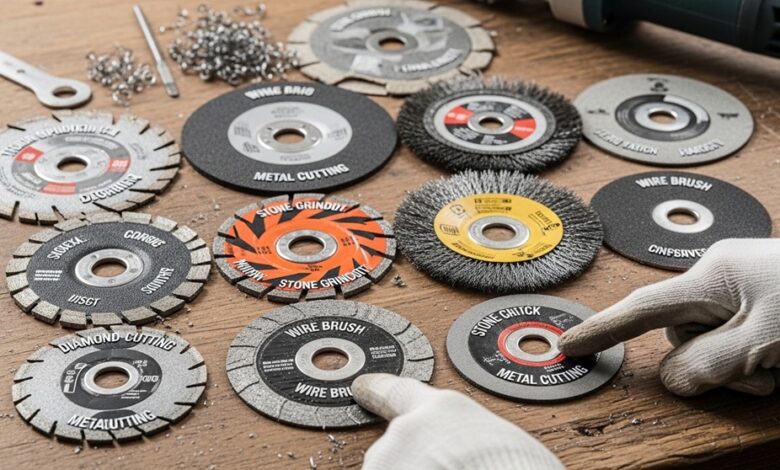
The right disc for your angle grinder depends on your material and task. Use cutting wheels for slicing metal or tiles, grinding discs for smoothing and shaping, and flap discs for finishing and polishing. Choosing the wrong disc can reduce efficiency, damage materials, or create safety risks.
Why Choosing the Right Disc Matters
Most people think an angle grinder is all about power. That’s only half the story. The real difference comes from the disc you use.
Here’s the problem: using the wrong grinding disc or cutting wheel can lead to rough cuts, wasted materials, and even dangerous kickbacks. Many beginners—and even experienced users—make this mistake. They assume one disc fits all tasks.
That assumption costs time, money, and safety.
The solution is simple but often overlooked: match the disc to the job. Whether you’re cutting metal, smoothing welds, or polishing surfaces, each disc type is designed for a specific purpose.
This guide breaks everything down. You’ll learn how grinding discs, cutting wheels, and flap discs work, when to use them, and how to choose the best one for your needs.
By the end, you’ll avoid common mistakes and get cleaner, faster results every time.
What Are the Main Types of Angle Grinder Discs?
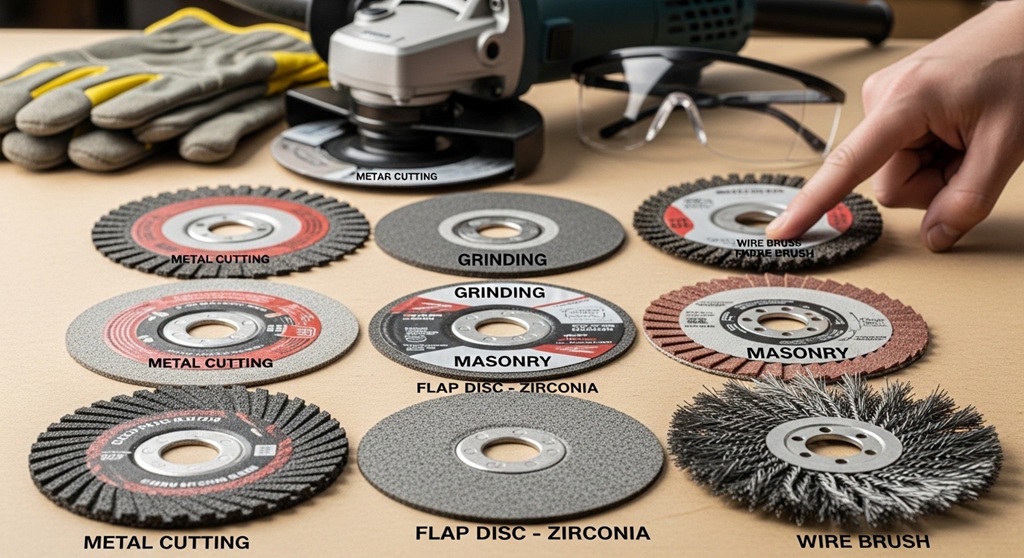
Quick Answer: The three main types are cutting wheels, grinding discs, and flap discs. Each serves a different purpose—cutting, shaping, and finishing.
1. Cutting Wheels
Cutting wheels are thin discs designed for slicing through materials like metal, steel, tiles, and concrete.
- Thickness: Typically 1mm–3mm
- Best for: Straight cuts
- Materials: Metal, stainless steel, tiles
They are not designed for grinding. Using them incorrectly can cause breakage.
2. Grinding Discs
Grinding discs are thicker and built for material removal.
- Thickness: Usually 6mm or more
- Best for: Smoothing welds, shaping metal
- Materials: Steel, iron
They last longer but produce rougher finishes.
3. Flap Discs
Flap discs combine grinding and finishing in one tool.
- Structure: Overlapping abrasive flaps
- Best for: Finishing and blending
- Materials: Metal, wood
They offer better control and smoother results.
How Do You Choose the Right Disc for Your Task?
Quick Answer: Match the disc to your task—cutting, grinding, or finishing—and ensure compatibility with your material and grinder size.
Let’s break this down step-by-step.
Identify Your Material
- Metal → Use cutting wheels or grinding discs
- Concrete → Use diamond discs
- Wood → Use specialized wood discs
Define Your Goal
- Cutting → Thin cutting wheel
- Shaping → Grinding disc
- Finishing → Flap disc
Check Disc Size
Common sizes include:
- 4.5 inches (115mm)
- 5 inches (125mm)
- 7 inches (180mm)
Always match the disc size with your grinder’s rating.
Step 4: Consider Speed Rating
Every disc has an RPM rating. Your grinder must not exceed it.
What Are the Key Differences Between Grinding Discs, Cutting Wheels, and Flap Discs?
Quick Answer: Cutting wheels are for slicing, grinding discs are for heavy material removal, and flap discs are for finishing and polishing.
| Feature | Cutting Wheels | Grinding Discs | Flap Discs |
|---|---|---|---|
| Purpose | Cutting | Grinding | Finishing |
| Thickness | Thin | Thick | Medium |
| Finish Quality | Rough | Medium | Smooth |
| Durability | Low | High | Medium |
This comparison helps you avoid using the wrong tool.
Which Disc Should You Use for Metal Cutting?
Quick Answer: Use a thin cutting wheel (1–2mm) specifically designed for metal or stainless steel.
Using the right cutting wheel improves precision and reduces heat buildup.
Best Practices:
- Choose reinforced discs for safety
- Use steady pressure—don’t force the cut
- Avoid twisting the disc
Case data shows that thin cutting discs can increase cutting speed by up to 30% compared to thicker alternatives.
Which Disc Is Best for Grinding and Smoothing?
Quick Answer: Use grinding discs for heavy removal and flap discs for smoother finishes.
If your goal is to remove welds or shape metal, start with a grinding disc. Then switch to a flap disc for finishing.
Why This Works:
- Grinding discs remove material quickly
- Flap discs reduce scratches
- Combination saves time overall
This two-step method is widely used in fabrication workshops.
What Grit Size Should You Choose for Flap Discs?
Quick Answer: Use lower grit (40–60) for heavy removal and higher grit (80–120+) for finishing.
| Grit Size | Use Case |
|---|---|
| 40 | Heavy grinding |
| 60 | General purpose |
| 80 | Smoothing |
| 120+ | Polishing |
Choosing the right grit improves surface quality and reduces rework.
Are Diamond Discs Better for Concrete and Stone?
Quick Answer: Yes. Diamond discs are the best choice for concrete, stone, and tiles due to their durability and precision.
Unlike standard abrasive discs, diamond discs last longer and cut faster.
Types of Diamond Discs:
- Segmented → Fast cutting
- Continuous rim → Smooth finish
- Turbo → Balanced performance
For construction work, diamond discs are often the most cost-effective option long-term.
What Safety Tips Should You Follow When Using Grinder Discs?
Quick Answer: Always use the correct disc, wear protective gear, and never exceed speed ratings.
Essential Safety Tips:
- Wear gloves, goggles, and face shield
- Inspect discs for cracks
- Secure your material
- Use proper guard
Data from workshop incidents shows that improper disc usage is a leading cause of grinder accidents.
What Are Common Mistakes When Choosing Grinder Discs?
Quick Answer: The biggest mistakes include using the wrong disc type, ignoring RPM ratings, and choosing incorrect grit.
Top Mistakes:
- Using cutting wheels for grinding
- Ignoring material compatibility
- Choosing cheapest discs over quality
These mistakes reduce efficiency and increase risk.
Conclusion: How to Choose the Right Disc Every Time
Choosing the right disc isn’t complicated—but it does require attention.
Here’s the simple formula:
- Match disc type to task
- Choose correct grit
- Check size and RPM
When you follow these steps, your work becomes faster, cleaner, and safer.
Don’t treat all discs the same. That’s where most people go wrong.
Call to Action: Before your next project, take a moment to check your disc. The right choice can save time, improve results, and prevent costly mistakes. Bookmark this guide and use it as your go-to reference.
FAQ: Angle Grinder Disc Selection
1. Can I use a cutting wheel for grinding?
No. Cutting wheels are not designed for side pressure. Using them for grinding can cause breakage and serious injury.
2. What is the best disc for beginners?
Flap discs are ideal for beginners because they are easier to control and provide smoother finishes.
3. How long do grinder discs last?
It depends on usage and material. Grinding discs last longer than cutting wheels, while diamond discs offer the longest lifespan.
4. What size disc should I use?
Use the size recommended by your grinder—commonly 4.5-inch or 5-inch for general use.
5. Are expensive discs worth it?
Yes. Higher-quality discs last longer and perform better, reducing overall cost per use.
6. What RPM rating should I look for?
Always choose a disc with an RPM rating higher than your grinder’s maximum speed.
7. Can I use one disc for multiple materials?
Some discs are multi-purpose, but it’s always better to use material-specific discs for best results.
Read More Also: How to Choose Budget Cycling Shorts for Beginner Women Cyclists
Find out: How to Use a Digital Tire Inflator for Accurate Pressure Control


