


Choosing the right tape measure might seem simple at first glance. However, this essential tool comes in various styles, sizes, and features that can significantly impact your project success. Whether you’re hanging pictures, building furniture, or tackling renovation projects, the perfect tape measure makes all the difference. This comprehensive guide will help you select the ideal measuring tool for your home needs.
Why Your Tape Measure Choice Matters
Many homeowners underestimate the importance of quality measuring tools. A poor-quality tape measure can lead to costly mistakes, wasted materials, and frustrating do-overs. Moreover, the right tool saves time and increases accuracy across all your projects.
Your measuring needs depend on the tasks you regularly perform. Simple picture hanging requires different features than building a deck. Therefore, understanding your typical projects helps narrow down the options. Consider how often you measure, what materials you work with, and the typical distances you need to cover.
Understanding Tape Measure Length Options
Tape measures come in various lengths, each suited for different applications. Selecting the appropriate length ensures you can complete tasks efficiently without struggling with excess tape or insufficient reach.
Standard residential tape measures range from 12 feet to 35 feet. Shorter 12-foot to 16-foot models work perfectly for basic household tasks like measuring windows, doors, or furniture placement. They fit easily in toolboxes and kitchen drawers, making them convenient for quick measurements.
Mid-range 25-foot tape measures represent the sweet spot for most homeowners. This length handles the majority of indoor measuring tools tasks without becoming cumbersome. You can measure entire rooms, check ceiling heights, and handle most furniture projects with ease.
Longer 30-foot to 35-foot options suit homeowners who frequently work on larger projects. These excel for outdoor measurements, deck building, or room additions. However, they’re bulkier and heavier than shorter alternatives.
Tape Width and Standout Capability
The tape blade width affects both durability and usability. Wider blades offer greater standout, meaning they extend farther before bending or collapsing. This feature becomes crucial when measuring alone.
Standard tape widths range from half an inch to one and a quarter inches. Narrow half-inch blades work fine for light-duty tasks but have limited standout. They’re compact and lightweight, ideal for occasional use.
Three-quarter-inch wide blades provide a good balance. They offer reasonable standout while remaining manageable for everyday tasks. Most general-purpose tape measures feature this width.
One-inch wide blades deliver excellent standout, often extending seven to ten feet horizontally. This makes solo measuring much easier. Additionally, the wider blade feels more substantial and durable. However, these tape measures are larger and heavier overall.
Blade Coating and Durability Features
Modern tape measures feature various blade coatings that enhance longevity and readability. Understanding these options helps you choose a tool that withstands your usage patterns.
Nylon-coated blades resist wear and tear effectively. The coating protects against scratches, moisture, and general abuse. These blades maintain their markings longer than uncoated versions. Furthermore, nylon provides a slight cushioning effect that protects the blade from impacts.
Polymer-coated options offer similar benefits with enhanced UV resistance. If you frequently work outdoors, this coating prevents sun damage and fading. The markings remain crisp and readable for years.
Some premium models feature dual-sided printing. This allows you to read measurements from either side of the blade. While not essential, this feature adds convenience, especially in tight spaces where flipping the tape proves difficult.
Understanding Measurement Markings
Clear, easy-to-read markings separate quality tape measures from mediocre ones. The best options feature multiple marking systems that accommodate various project needs.
Standard imperial markings show feet and inches with fractional increments. Most display down to sixteenth-inch marks, sufficient for typical home projects. Some professional-grade options include thirty-second-inch marks for precision work.
Metric markings appear on many modern tape measures. Even if you primarily work in inches, having centimeters and millimeters available proves useful. Some furniture assembly instructions and international product specifications use metric measurements exclusively.
Stud markings highlight common 16-inch and 24-inch intervals. These red or black indicators help when framing walls or locating studs behind drywall. This feature saves time and mental math during construction projects.
Large, high-contrast numbers improve readability in dim lighting. Yellow or white backgrounds with black numbers work best. Some manufacturers use color-coding for different measurement increments, making quick reading easier.
Locking Mechanisms and Ease of Use
A reliable lock keeps your tape extended during measurements. Poor locking mechanisms lead to frustration and imprecise measurements when the tape retracts unexpectedly.
Thumb locks represent the most common type. You press down with your thumb to hold the tape in place. Quality versions engage smoothly and hold firmly without requiring excessive pressure. Look for locks that operate easily with gloves on if you work in cold conditions.
Slide locks use a switch mechanism instead of a button. These work well for people with limited hand strength or arthritis. Additionally, they’re less likely to engage accidentally during transport.
Auto-lock features engage automatically when you stop pulling the tape. These eliminate the need to activate a separate mechanism. However, they require a deliberate release action to retract, which some users find inconvenient.
Housing Design and Grip Comfort
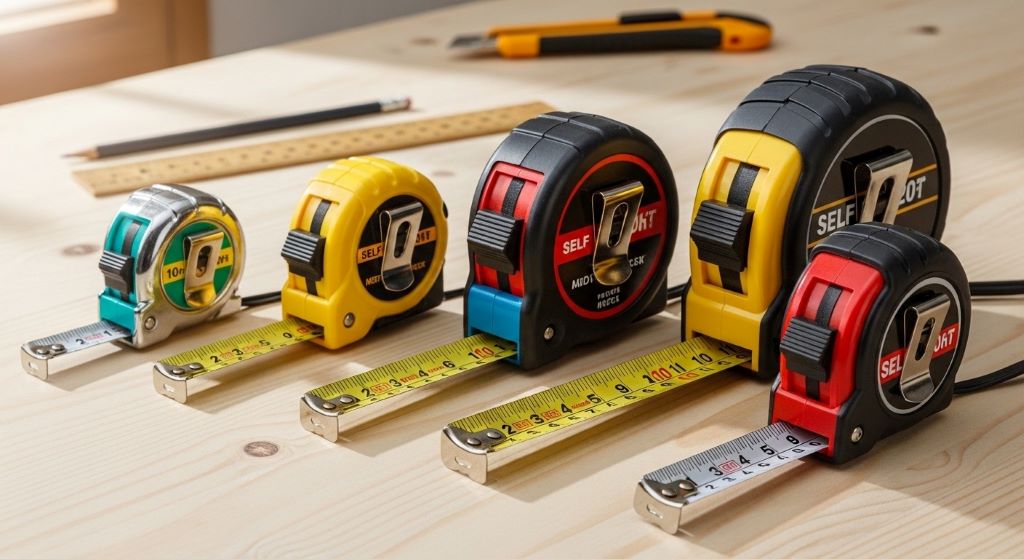
The tape measure casing affects both durability and user comfort. Well-designed housings withstand drops while providing secure grip during use.
Rubberized cases offer excellent shock absorption. They protect the internal mechanism when dropped and provide non-slip grip in wet or sweaty conditions. Most professional-grade options include substantial rubber overmolding.
Ergonomic shapes fit naturally in your hand, reducing fatigue during extended use. Contoured designs with finger grooves work particularly well. Some models feature asymmetric shapes that indicate proper orientation by feel alone.
Belt clips allow convenient carrying between tasks. Look for sturdy metal clips rather than plastic versions that break easily. The clip should hold firmly to prevent loss while remaining easy to attach and remove.
Hook Quality and Versatility
The end hook might seem like a minor component, but it significantly impacts measurement accuracy and versatility. Quality hooks deliver consistent, precise measurements across various applications.
Magnetic hooks stick to metal surfaces, allowing single-person measurements on steel studs, appliances, or metal framing. The magnet should hold firmly without sliding but release easily when finished. This feature proves invaluable when working alone.
Multi-catch hooks include slots and holes for various attachment methods. These accommodate screws, nails, and edges differently, increasing versatility. Some designs even include small levels or scribing tools integrated into the hook.
True-zero hooks move slightly on their rivets to compensate for the hook thickness. This ensures accuracy whether you’re hooking over an edge or pushing against a surface. Quality tape measures account for this with carefully engineered hook mounting.
Advanced Features Worth Considering
Modern tape measures include innovative features that enhance functionality. While not essential, these additions can improve your DIY measuring guide experience significantly.
Digital displays show measurements on LCD screens, eliminating reading errors. Some models calculate and store multiple measurements, add distances automatically, or convert between measurement systems instantly. Battery life and display visibility become important considerations with digital options.
Laser measurement integration combines traditional tape measuring with laser distance technology. You can quickly measure long distances or hard-to-reach areas without extending the tape. These hybrid tools cost more but offer exceptional versatility.
Bluetooth connectivity allows some tape measures to send measurements directly to smartphones or tablets. Project planning apps can store and organize these measurements automatically. This feature suits anyone managing multiple projects or creating detailed plans.
Selecting Based on Your Primary Uses
Different home projects demand different tape measure characteristics. Matching your tool to your most common tasks ensures satisfaction and efficiency.
For basic home maintenance and decoration, a simple 16-foot to 25-foot tape with clear markings suffices. You don’t need advanced features for hanging pictures, measuring curtains, or checking furniture dimensions. Prioritize readability and comfortable grip over bells and whistles.
Furniture building and woodworking require greater precision and durability. Choose a 25-foot tape with sixteenth-inch markings, strong standout, and a reliable lock. Wide blades help when measuring large panels alone. Magnetic hooks assist when working with metal components.
Home renovation and construction projects demand professional-grade tools. Invest in a 30-foot to 35-foot tape with excellent standout, durable housing, and clear markings. Stud indicators and magnetic hooks become genuinely useful. Consider models with reinforced cases that survive jobsite conditions.
Budget Considerations and Value
Tape measures span a wide price range, from a few dollars to over a hundred for advanced models. Understanding what you get at different price points helps maximize value.
Budget options under ten dollars work fine for occasional use. They lack advanced features and durability but handle basic measuring tasks adequately. These make sense for renters or people who measure infrequently.
Mid-range tools between fifteen and forty dollars offer the best value for most homeowners. They include quality construction, clear markings, and useful features without excessive cost. Brands at this price point typically stand behind their products with warranties.
Premium tape measures exceeding fifty dollars target serious DIYers and professionals. They feature exceptional durability, innovative designs, and lifetime warranties. The investment makes sense if you use your tape measure regularly or depend on it for income-generating projects.
Maintenance and Longevity Tips
Proper care extends your tape measure’s lifespan significantly. These simple practices keep your tool accurate and reliable for years.
Always retract the tape slowly rather than letting it snap back. Rapid retraction damages the spring mechanism and can cause the blade to kink. Guide it gently with your hand to prevent wear.
Keep the blade clean and dry. Wipe away sawdust, drywall dust, or moisture after each use. Dirt in the housing grinds against the blade, accelerating wear and affecting accuracy.
Store your tape measure in a dry location away from extreme temperatures. Excessive heat or cold can affect the spring tension and blade coating. A toolbox or drawer works better than leaving it in an unheated garage or hot vehicle.
Check the hook periodically to ensure it moves freely on its rivets. The hook should slide slightly to maintain accuracy. If it becomes bent or stuck, measurements will be consistently off.
Making Your Final Decision
Choosing the best tape measure involves balancing multiple factors against your specific needs and budget. Start by identifying your primary use cases and frequency of use.
Consider which features truly benefit your projects versus those that merely sound impressive. A magnetic hook helps when working with metal, but it’s useless if you primarily work with wood. Digital displays add convenience but require batteries and cost significantly more.
Read reviews from other homeowners with similar needs. Real-world experiences reveal durability issues, usability quirks, and long-term satisfaction that specifications alone don’t convey.
Visit a hardware store to handle different models if possible. The right tape measure feels comfortable and intuitive in your hand. Weight, button placement, and blade visibility vary considerably between brands.
Conclusion
Selecting the ideal tape measure for home use requires understanding your measuring needs, project types, and preferred features. Length, blade width, marking clarity, and housing durability all contribute to user satisfaction and measurement accuracy. Therefore, investing time in choosing the right indoor measuring tools pays dividends through years of reliable service.
Whether you need a basic model for occasional picture hanging or a feature-rich option for extensive DIY projects, the perfect tape measure exists for your situation. Focus on quality construction, clear markings, and features that match your actual usage patterns rather than chasing unnecessary bells and whistles.
Remember that even the best tape measure requires proper care and maintenance to deliver consistent performance. By following the guidance in this DIY measuring guide, you’ll select a tool that serves you well for countless projects ahead.
Frequently Asked Questions
What length tape measure should I buy for general home use?
A 25-foot tape measure handles most residential measuring tasks perfectly. This length reaches across typical rooms, measures furniture, and tackles common DIY projects without becoming unwieldy. Shorter 16-foot options work for apartment dwellers or those with minimal measuring needs, while 30-foot versions suit larger homes or frequent outdoor projects.
How important is the standout feature on a tape measure?
Standout capability matters significantly when measuring alone or in tight spaces. Better standout means the tape extends horizontally without bending, eliminating the need for a helper to hold the far end. For most homeowners, a seven to eight-foot standout proves adequate, though serious DIYers benefit from ten-foot capability.
Are digital tape measures worth the extra cost?
Digital tape measures offer convenience through automatic calculations and measurement storage, making them valuable for complex projects requiring multiple measurements. However, traditional tape measures remain more reliable, never need batteries, and cost considerably less. Choose digital options only if you frequently work on projects where calculation features genuinely save time.
What makes some tape measures more accurate than others?
Accuracy depends primarily on hook quality and blade rigidity. Quality tape measures feature true-zero hooks that compensate for hook thickness, ensuring consistent measurements regardless of whether you hook or push. Class I or Class II accuracy ratings indicate tighter tolerances, though Class III suffices for most home projects.
How can I tell if my tape measure is wearing out?
Signs of wear include difficulty retracting, a bent or damaged hook, faded markings, a blade that won’t lock securely, or inconsistent measurements compared to a known standard. Once you notice these issues, replace your tape measure to avoid measurement errors that waste time and materials on projects.
Related Topics:
How to Identify a High-Quality Diamond: Understanding the 4Cs and Certification
Passive Cooling Strategies Using Rammed Earth Mass