


Key Takeaways
- Every vehicle sold in the United States since 1981 carries a standardized 17-character VIN.
- The VIN splits into three sections: manufacturer identifier, vehicle description, and vehicle identifier.
- Letters I, O, and Q never appear in a VIN, since they resemble numbers too closely.
- The NHTSA offers a free, official VIN decoder at vpic.nhtsa.dot.gov/decoder.
- Position 10 reveals model year, while position 9 confirms the VIN itself is valid.
- Using a VIN decoder before buying protects you from title fraud and hidden vehicle history.
Every vehicle carries a hidden code that tells its complete story. That code, the vehicle identification number, holds far more information than most drivers realize. Learning to read it properly protects you during any used car purchase. This guide walks through exactly how a VIN decoder works, character by character, and why understanding it matters.
What a VIN Actually Is and Why It Matters
A vehicle identification number works like a fingerprint. No two vehicles in regular operation share the same 17-character code. That uniqueness makes the VIN essential for everything from recalls to insurance claims.
The National Highway Traffic Safety Administration established this standardized format in 1981. Before that regulation, manufacturers used their own inconsistent numbering systems. Tracking vehicles across state lines and dealerships became difficult without one shared standard. The 17-character format solved that problem permanently across the entire industry.
This standardization serves several practical purposes beyond simple identification. NHTSA uses VINs to track vehicles affected by safety recalls and ongoing defect investigations. Law enforcement relies on VINs to identify stolen vehicles, since the number gets stamped into multiple hidden locations on every car. State motor vehicle departments use VINs to register and title vehicles accurately, while insurance companies use them to assess risk correctly.
Manufacturers benefit too, tracking production runs and managing warranty claims through this same numbering system. Therefore, a single 17-character code connects nearly every institution involved in a vehicle’s life. Understanding how to read that code gives you direct access to information that otherwise requires separate research across multiple sources. A reliable VIN decoder turns that raw code into clear, useful answers within seconds.
Breaking Down the Three Main VIN Sections
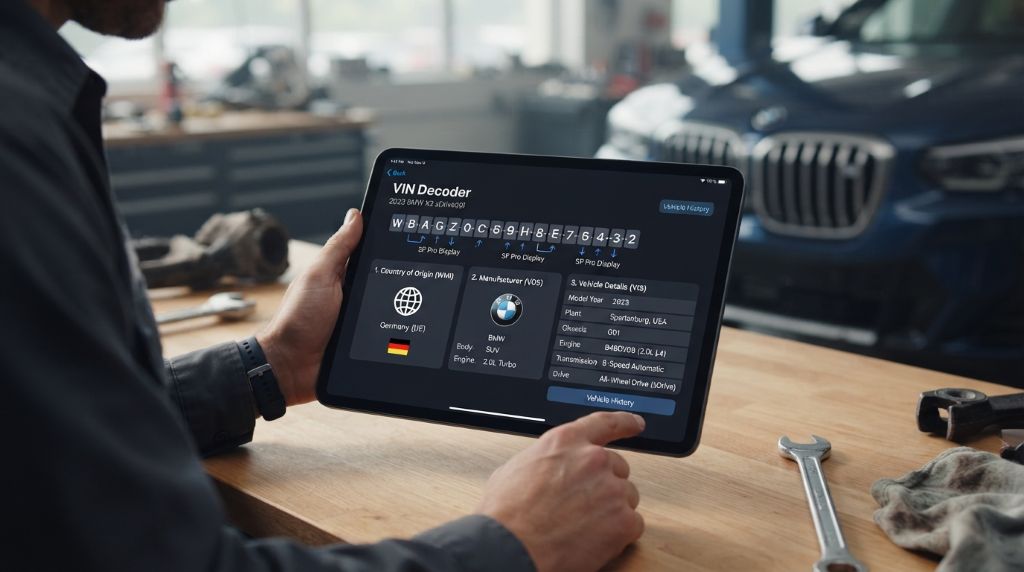
Every VIN divides into three distinct sections, each serving a specific purpose. Understanding this structure makes the entire code far less intimidating to read.
The first section, positions one through three, forms the World Manufacturer Identifier. This short code reveals the vehicle’s country of origin and specific manufacturer. For example, VINs beginning with a number often indicate US-built vehicles, while those starting with a letter frequently point toward European or Asian manufacturing origins. Larger manufacturers receive a shared three-character code, while smaller specialty manufacturers sometimes use additional characters elsewhere in the VIN to identify themselves fully.
The second section, positions four through eight, makes up the Vehicle Descriptor Section. These characters describe the vehicle’s body style, engine type, model, and safety restraint systems. Manufacturers define these codes internally, which means the same character position can mean different things across different brands. Position nine serves a separate but critical function, working as a check digit that mathematically verifies the VIN itself is valid and has not been altered.
The final section, positions ten through seventeen, forms the Vehicle Identifier Section. This portion reveals the model year, assembly plant location, and a unique serial number specific to that individual vehicle. Together, these three sections turn a random-looking string of characters into a detailed vehicle record.
Decoding Specific Characters Step by Step
Certain VIN positions carry particularly useful information for everyday buyers and owners. Knowing exactly where to look saves time during any vehicle history check.
Position ten deserves special attention, since it directly indicates the vehicle’s model year. Manufacturers use a rotating cycle of letters and numbers for this position, repeating roughly every thirty years. This means the same character can represent different years depending on when the vehicle was actually built, so cross-checking against other VIN details matters for older vehicles.
Position eleven identifies the specific assembly plant where the vehicle was manufactured. This detail matters more than many buyers realize, since build quality can vary between different plants producing the same model. Positions twelve through seventeen make up the vehicle’s unique serial number, distinguishing it from every other vehicle built on the same production line.
Notice that VINs never include the letters I, O, or Q. These letters closely resemble the numbers one and zero, creating confusion during manual entry or visual inspection. NHTSA excluded them deliberately when finalizing the standardized format back in 1981.
A quick personal example illustrates why this precision matters. A relative once nearly purchased a vehicle with a VIN that did not match its title paperwork by a single character. Running the number through an official decoder immediately flagged the discrepancy. That five-minute check likely prevented a serious title fraud situation, saving thousands of dollars and considerable legal hassle later.
How to Use a VIN Decoder the Right Way
Running a VIN through a decoder takes only a few minutes, yet many buyers skip this step entirely. That mistake often costs far more than the time saved.
Start with the official NHTSA VIN decoder, available free at vpic.nhtsa.dot.gov/decoder. This government-run tool pulls directly from manufacturer-submitted data, making it a reliable first stop for basic vehicle specifications. Simply enter the 17-character VIN, and the tool returns details including make, model, engine type, and plant of manufacture.
Locating the actual VIN comes first, before any decoding can happen. Check these common locations:
- The driver’s side dashboard, visible through the windshield from outside the car.
- Inside the driver’s door frame or door pillar, usually on a printed sticker.
- The vehicle’s title, registration, or insurance documents.
- Underneath the hood, stamped directly onto the engine block.
Once you have the VIN, cross-reference the decoder results against the vehicle’s actual features in person. Confirm the engine type, trim level, and body style all match what the seller claims. Mismatches between decoded results and the physical vehicle often signal altered paperwork or a rebuilt title.
However, a basic decoder only reveals factory specifications, not accident or ownership history. Pairing a VIN decoder with a full vehicle history report gives you a much more complete picture before committing to any purchase.
Why VIN Decoding Protects Every Buyer
Skipping VIN verification exposes buyers to risks that go well beyond simple inconvenience. Understanding these risks explains why this step deserves real priority during any purchase.
Title washing represents one of the more serious risks a VIN check helps prevent. This practice involves moving a vehicle with a salvage or flood title across state lines to obtain a cleaner title elsewhere. A VIN decoder paired with a history report often exposes this pattern clearly, revealing title changes and past damage claims that a seller might otherwise hide.
Odometer fraud represents another persistent problem in the used vehicle market. Comparing mileage listed in a VIN-based history report against the vehicle’s current odometer reading can reveal tampering immediately. Significant discrepancies deserve serious questions before any purchase moves forward.
Stolen vehicle sales also remain a genuine concern, particularly with private party transactions lacking dealer oversight. Running a VIN through official databases can confirm whether a vehicle carries a theft report, protecting buyers from unknowingly purchasing stolen property.
Therefore, VIN decoding functions as a form of due diligence every buyer should treat as non-negotiable. The process costs nothing and takes only minutes, yet it consistently prevents some of the most expensive mistakes a car buyer can make. Skipping it to save time rarely makes sense given the stakes involved.
Final Thoughts
A VIN decoder turns a confusing string of characters into genuinely useful vehicle information. Understanding the three main sections, along with key positions like the model year and check digit, gives any buyer real confidence. This knowledge protects against fraud, confirms accurate specifications, and supports smarter negotiation during any purchase. Before making a final decision, it is also worth learning how to verify a VIN number before buying a used car so you can confirm the vehicle’s history and details more confidently.
Taking a few minutes to decode a VIN properly costs nothing and prevents real financial risk. Every serious car buyer should treat this step as standard practice, not an optional extra. The information sitting inside those 17 characters simply matters too much to ignore.
Have you ever caught a discrepancy using a VIN decoder before buying a vehicle? Share your experience in the comments, and pass this guide along to anyone shopping for a car right now.
Is the NHTSA VIN decoder free to use?
Yes. The official NHTSA VIN decoder at vpic.nhtsa.dot.gov/decoder is completely free and requires no signup.
Why do VINs never include the letters I, O, or Q?
These letters look too similar to the numbers one and zero, so NHTSA excluded them to prevent errors.
Can a VIN decoder show me a car’s accident history?
No. Basic VIN decoders reveal factory specifications only; a separate vehicle history report covers accidents and ownership records.
What does position nine in a VIN actually do?
It functions as a check digit, mathematically confirming the VIN has not been altered or entered incorrectly.
How can I tell a vehicle’s model year from its VIN?
Position ten indicates model year, though the code cycles roughly every thirty years, so cross-check with other details.