
Most beginners focus on clubs, swing speed, or golf lessons. But one small detail often gets ignored: the golf ball itself. The number of layers inside a golf ball can directly affect distance, spin, feel, and control.
In simple terms, golf ball layers determine how the ball reacts when you hit it. A 2 piece golf ball is built for durability and distance, while 3 piece golf balls offer better control and spin around the greens. Some advanced balls also use a urethane cover, which improves feel and short-game performance.
For beginners, understanding these layers can help you choose the right ball and improve consistency faster. According to testing data from the USGA and multiple golf equipment manufacturers, ball construction can influence spin rates by up to 25% and launch characteristics depending on swing speed.
In this beginner guide, we will break down how golf ball layers work, why they matter, and how to choose the right one based on your playing style.
What Are Golf Ball Layers?
Quick answer: Golf ball layers are the internal components that control distance, spin, and feel when the ball is struck.
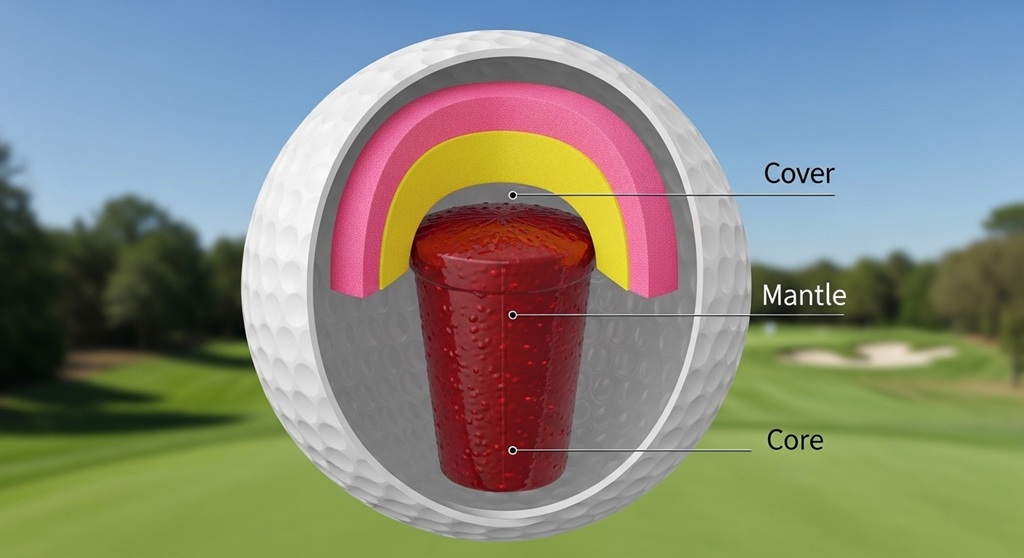
Modern golf balls are engineered with multiple layers. Each layer serves a specific purpose in performance. These layers typically include:
- Core
- Mantle layer
- Outer cover
The core is the inner center of the ball. It controls compression and energy transfer when the clubface strikes the ball. A larger and softer core generally produces longer distance for slower swing speeds.
The mantle layer sits between the core and cover. It helps regulate spin and improves energy transfer. This layer is often found in multi-layer balls such as 3 piece golf balls or tour-level balls.
The cover is the outer layer of the ball. It affects feel, durability, and spin. Common materials include Surlyn and urethane cover materials.
These layers work together to influence ball flight, control, and performance across different parts of the course.
What Is a 2 Piece Golf Ball?
Quick answer: A 2 piece golf ball has a solid core and a durable outer cover designed for maximum distance and durability.
A 2 piece golf ball is the most common ball used by beginners and casual players. Its construction is simple but effective.
| Component | Function |
|---|---|
| Large solid core | Creates high energy transfer and distance |
| Surlyn cover | Provides durability and reduces spin |
Because of the lower spin rates, these balls fly straighter. That is why beginners often see more consistent drives when using them.
For example, in testing conducted by Golf Digest equipment labs, players with swing speeds under 90 mph gained an average of 5–8 yards of distance using distance-focused two-piece golf balls compared to softer multi-layer balls.
Advantages of 2 Piece Golf Balls
- More distance for slower swing speeds
- Lower spin reduces slices and hooks
- Highly durable
- Affordable
Limitations
- Less spin control around greens
- Reduced feel compared to premium balls
This is why beginners, high handicappers, and recreational golfers often prefer this type of ball.
What Are 3 Piece Golf Balls?
Quick answer: A 3 piece golf ball contains a core, mantle layer, and outer cover designed to balance distance and control.
3 piece golf balls add an extra layer between the core and the cover. This mantle layer allows engineers to fine-tune spin and control.
Construction typically includes:
- Soft or responsive core
- Mantle layer for spin control
- Performance cover (often urethane)
The mantle layer improves energy transfer on full swings while maintaining higher spin rates on shorter shots. This creates better stopping power on the green.
In equipment testing from MyGolfSpy ball lab studies, three-piece balls consistently produced higher greenside spin rates compared with two-piece balls—sometimes by over 20%.
Benefits of 3 Piece Golf Balls
- Improved spin control
- Better feel on short shots
- Balanced performance for mid-handicap players
Drawbacks
- Usually more expensive
- May not add distance for slower swing speeds
Players who want more control over their approach shots often upgrade to this construction.
How Does a Urethane Cover Affect Golf Ball Performance?
Quick answer: A urethane cover increases spin and control, especially on short shots around the green.
The urethane cover is commonly used in premium golf balls. Compared with Surlyn covers, urethane produces higher friction when the clubface strikes the ball.
That friction creates more spin, which improves stopping power on the green.
Professional golfers almost always use urethane-covered balls for this reason. According to ball fitting data from TrackMan, urethane-covered balls can produce significantly higher wedge spin compared with ionomer or Surlyn-covered balls.
Key Advantages of Urethane Covers
- Higher spin around greens
- Softer feel
- Better shot shaping
Limitations
- Less durable than Surlyn
- Higher cost
For beginners, the added control may not always be noticeable. But as skill improves, the benefits become more apparent.
How Do Golf Ball Layers Affect Distance?
Quick answer: Golf ball layers affect distance by controlling compression, energy transfer, and spin rates.
Distance depends largely on three factors:
- Core compression
- Spin rate
- Launch angle
Two-piece balls often produce lower spin off the driver. Lower spin generally results in longer drives for players with moderate swing speeds.
Multi-layer balls, however, are engineered to optimize both distance and control. Tour-level balls may include four or five layers that adjust spin differently depending on club speed.
Launch monitor studies frequently show that lower driver spin can increase carry distance by several yards for amateur golfers.
Do More Layers Always Mean Better Performance?
Quick answer: Not necessarily. More layers increase control and customization but do not automatically improve performance for every golfer.
Many players assume that more layers equal better performance. That is not always true.
A beginner with a slower swing speed may actually perform better with a simple two-piece ball. Multi-layer balls are often designed for faster swings that compress the core effectively.
If the ball is too firm or complex for the player’s swing speed, it may reduce distance rather than improve it.
The best approach is to choose a ball that matches your swing speed and playing style rather than simply choosing the most advanced design.
How Should Beginners Choose the Right Golf Ball?
Quick answer: Beginners should prioritize forgiveness, durability, and consistent distance.
When selecting a golf ball, beginners should focus on practical performance factors rather than marketing claims.
Key Factors to Consider
- Swing speed
- Budget
- Durability
- Shot consistency
For most beginners, 2 piece golf balls provide the best combination of distance and forgiveness.
As skill improves, players may benefit from switching to 3 piece golf balls with a urethane cover to gain more control around the greens.
Golf ball fitting sessions offered by many golf retailers can also help determine which construction works best for your game.
Conclusion: Why Golf Ball Construction Matters
Golf ball layers might seem like a small technical detail, but they can influence how your shots perform across the course. The internal structure of the ball affects spin, feel, control, and distance.
Beginners often see the best results with 2 piece golf balls because they provide durability, straight flight, and reliable distance. As players develop better control and faster swing speeds, 3 piece golf balls and balls with a urethane cover can deliver improved performance around the greens.
Understanding how golf ball layers work helps you choose equipment that matches your skill level rather than guessing based on brand names or price.
If you want to improve your golf performance faster, start experimenting with different ball constructions during practice rounds. The right ball can make a noticeable difference in distance, consistency, and short-game control.
Next step: Try testing both two-piece and three-piece balls during your next practice session. Track your distance, spin, and control to find the ball that works best for your game.
FAQ: Golf Ball Layers Explained
Do beginners need multi-layer golf balls?
Most beginners do not need multi-layer balls. Two-piece golf balls provide better durability, lower spin, and more distance for slower swing speeds.
What is the main difference between 2 piece golf balls and 3 piece golf balls?
Two-piece balls focus on distance and durability. Three-piece balls include an additional mantle layer that improves spin control and feel around the greens.
Why do professional golfers prefer urethane cover golf balls?
Professional players prefer urethane covers because they produce higher spin and better stopping power on short shots.
Are urethane golf balls better for beginners?
Not always. While urethane balls provide more control, beginners may not fully benefit from the extra spin and may prefer the durability of Surlyn-covered balls.
Do golf ball layers affect swing speed?
Golf ball layers do not change swing speed, but they influence how efficiently energy is transferred from the club to the ball.
Can using the wrong golf ball affect performance?
Yes. Using a ball designed for faster swing speeds can reduce distance and control for beginners.
How do I know which golf ball is best for my game?
The best way is to test several types during practice rounds or get fitted using a launch monitor that measures distance, spin, and ball flight.
Read More Also: How to Choose the Best Sports Duffel Bags for Athletes
Find out: How to Set Up a Reef Aquarium Tank the Right Way