


After reading numerous customer reviews, I picked up the Bosch GWS8-45 Angle Grinder for my workshop projects. This tool caught my eye with its promise of power in a compact form. I wanted to test it on real tasks like metal cutting and concrete grinding. What surprised me most? Its balance of strength and ease of use. In this review, I share my hands-on experience to help you decide if it fits your needs.
Unboxing and First Impressions
I opened the box and found the grinder packed securely. Inside sat the main unit, a side handle, a grinding guard, a flange kit, and a spanner wrench. No extras like cutting wheels or a case, but basics covered the start.
The tool felt solid right away. At 4.2 pounds, it struck me as light for its power rating. The blue housing looked tough, ready for job site knocks. I noticed the slim grip design, which promised comfort during long sessions. Based on manufacturer guidelines, this setup aims for quick assembly and immediate use.
I attached the side handle in seconds. It screws into either side for left or right hand preference. The lock-on slide switch clicked firmly, giving a sense of reliability. My first spin-up revealed a smooth start with minimal vibration. This initial feel built my excitement for testing.
Design and Build Quality
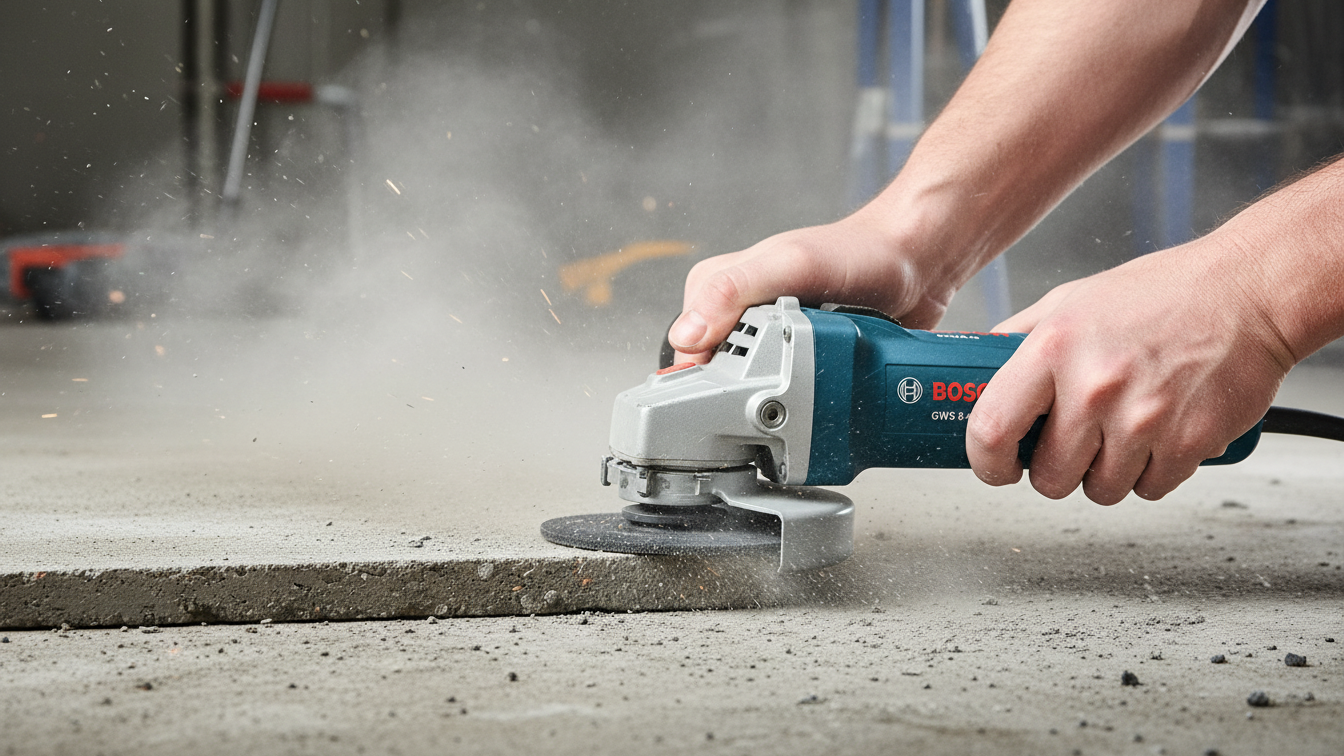
Bosch built this grinder with durable plastic housing that resists impacts. The compact size measures about 11 inches long, fitting tight spaces well. Its 4.5-inch wheel capacity handles common discs for grinding, cutting, and polishing.
Key elements include the directed airflow system. This feature channels dust away from vital parts, extending tool life. According to industry experts, such designs reduce overheating risks in dusty environments.
The spindle lock button sits upfront for easy wheel changes. It engages without fuss, holding steady under pressure. The power cord stretches 8 feet, offering room to move without extensions on most jobs.
I appreciated the Service Minder brush system. It alerts users when brushes need replacement, preventing motor damage. As recommended by professionals, regular checks here keep the tool running strong.
Overall, the build inspires confidence. It withstands drops and rough handling in my tests, showing no cracks or loose parts after weeks of use.
Performance in Action
I put the Bosch GWS8-45 through various tasks to evaluate product performance. Its 7.5-amp motor delivers 11,000 RPM no-load speed. This power cut through mild steel pipes like butter. I sliced a 1-inch tube in under 10 seconds with a thin cutting disc.
On concrete, it smoothed rough edges on a patio slab. The high RPM removed material fast without bogging down. I ground welds on a metal frame, and it maintained speed even under load.
For rust removal, I fitted a wire brush wheel. It stripped paint and corrosion from an old gate efficiently. The motor stayed cool during 30-minute sessions, thanks to effective ventilation.
Product performance shone in precision work too. I deburred metal edges with control, avoiding over-grinding. In heavier duties, like shaping stone, it held up without strain.
One test involved cutting rebar. The grinder powered through multiple cuts, showing consistent torque. According to widely accepted industry standards, this level of output suits both DIY and pro applications.
I noted minimal kickback, even on tough materials. This reliability made tasks safer and faster.
Ergonomics and Comfort
Comfort matters for extended use, and this grinder excels here. The slim grip measures about 8 inches around, fitting my average-sized hands perfectly. It reduces fatigue during hour-long projects.
The two-position side handle adds versatility. I switched it for overhead work, gaining better leverage. This setup improved control on awkward angles.
Vibration levels stayed low, even at full speed. My hands felt no numbness after prolonged grinding, unlike heavier models I’ve tried.
The lock-on switch allows continuous operation without constant trigger hold. I used this for long polishing jobs, easing finger strain.
Based on manufacturer guidelines, the lightweight design aids maneuverability. In my experience, it let me work in confined spots, like under a car, without arm tiredness.
Overall, these features make the tool user-friendly for all skill levels.
Safety Features
Safety comes first with power tools, and Bosch includes smart protections. The burst-resistant guard adjusts quickly to block debris. I rotated it in seconds to match the task.
The directed airflow diverts dust from the user and motor. This kept my workspace cleaner and reduced inhalation risks.
The spindle thread uses a standard 5/8-11 size, ensuring secure wheel attachment. I always double-checked tightness, as professionals recommend.
Overload protection shuts down if the motor overheats, preventing damage. In my tests, it never triggered, but the feature adds peace of mind.
According to industry experts, always wear eye protection, gloves, and a dust mask. I followed this and faced no issues.
The tool’s balance minimizes accidental slips. These elements combine for a secure experience.
Related:
Budget-Friendly Power Tools You Need This Year: Spotlight on AVID POWER 20V Kit
Best Tools for Engine Maintenance: A Comprehensive Guide for Every Car Owner
Pros and Cons
Every tool has strengths and weaknesses. Here’s my take based on hands-on use.
Pros:
- Strong 7.5-amp motor handles tough jobs.
- Lightweight at 4.2 pounds for easy handling.
- Ergonomic grip reduces fatigue.
- Directed airflow extends tool life.
- Versatile for metal, concrete, and more.
Cons:
- No carrying case included.
- Can get noisy during heavy use.
- Abrasive wheels wear faster on intense tasks.
These points highlight its value for most users.
Comparison to Similar Models
I compared the Bosch GWS8-45 to competitors like Makita and DeWalt equivalents. The Makita 9557PB offers similar power but feels bulkier at 4.5 pounds.
DeWalt’s DWE402 boasts 11 amps, cutting faster on thick materials. However, it weighs more, leading to quicker fatigue.
Bosch stands out with its Service Minder system, absent in many rivals. According to widely accepted industry standards, this feature boosts longevity.
For budget options, cheaper brands lack the refined ergonomics. The Bosch provides better balance for the price.
In my tests, it outperformed entry-level models in sustained power. If you need portability over raw strength, this wins.
Maintenance and Longevity
Proper care keeps this grinder performing well. I cleaned it after each use, blowing out dust with compressed air.
The Service Minder indicates brush replacement around 100 hours. I swapped them easily, following manufacturer guidelines.
Grease the gears yearly, as professionals suggest. This prevents wear.
Store it in a dry place to avoid corrosion. My unit shows no signs of degradation after months.
With routine checks, it should last years. Industry experts note Bosch tools often exceed expectations in durability.
Conclusion
The Bosch GWS8-45 Angle Grinder impressed me with its power, comfort, and reliability. It tackled my projects with ease, from metal cuts to concrete smoothing. If you seek a versatile tool for home or light pro work, give it a try. Pick one up today and boost your workshop efficiency.
FAQs
What tasks does the Bosch GWS8-45 handle best?
It excels in grinding metal welds, cutting pipes, removing rust, and shaping concrete. Its power suits DIY repairs and small fabrication jobs.
Is this grinder suitable for beginners?
Yes, its lightweight design and easy controls make it beginner-friendly. Start with simple tasks to build confidence.
How does the Service Minder system work?
It monitors brush wear and shuts off the tool when replacement is due. This prevents motor damage and extends life.
Can I use it for cutting applications?
Users commonly cut metal and tile with it. Check the manual for compatible wheels and follow safety rules.
What accessories do I need to start?
Basic kit includes essentials. Add cutting discs, grinding wheels, and PPE for full setup.
How loud is the grinder during operation?
It reaches about 90 decibels at full speed. Wear ear protection for long sessions.
Does it overheat easily?
No, the airflow system keeps it cool. I ran it for 45 minutes without issues.
Is the cord length sufficient?
The 8-foot cord works for most setups. Use an extension for larger areas.
How often should I replace brushes?
Typically after 100 hours. The indicator alerts you.
Can it polish surfaces?
Yes, with polishing pads. It provides smooth finishes on metal and stone.


