
How to Find the Best Affordable Aquarium Stand Without Sacrificing Strength

Setting up an aquarium can be an expensive hobby. Between the tank, filtration system, lighting, and fish, costs add up quickly. However, one area where many beginners try to save money is the stand. This decision can be risky because your aquarium stand must support tremendous weight safely and reliably.
The good news is that you don’t need to spend a fortune to get a quality stand. Finding a budget fish tank stand that’s both affordable and strong is entirely possible when you know what to look for. This guide will show you how to evaluate stands, identify quality construction, and make a smart purchase that protects your investment and your home.
Understanding the importance of a proper stand goes beyond simply having a place to put your tank. The right support prevents catastrophic failures that can destroy your aquarium, flood your home, and harm your fish. Therefore, learning to balance cost with quality is one of the most important skills for any aquarium enthusiast.
Understanding the Weight Your Stand Must Support
Before shopping for any stand, you need to understand exactly how much weight it must handle. Many people drastically underestimate the total load an aquarium creates. This miscalculation leads to dangerous situations and structural failures.
Water weighs approximately 8.3 pounds per gallon. A 40-gallon tank therefore contains about 332 pounds of water alone. Additionally, you need to account for the glass tank itself, substrate, rocks, decorations, and equipment. The total weight often exceeds the water weight by 20 to 30 percent.
For example, a fully equipped 40-gallon aquarium can easily weigh 400 to 450 pounds. A 75-gallon setup might exceed 850 pounds. These numbers surprise many first-time aquarium owners who assumed their furniture could handle the load.
Furthermore, this weight sits continuously in one spot for months or years. Unlike temporary weight that you might place on furniture briefly, aquarium weight never lets up. The constant pressure can cause gradual sagging or sudden failure in stands not designed for this purpose.
Why Regular Furniture Won’t Work
Many beginners consider using existing furniture instead of purchasing a dedicated stand. While this seems like a budget-friendly solution, it’s actually quite dangerous. Regular furniture simply isn’t designed for aquarium use.
Dressers, bookshelves, and tables typically have weight ratings far below what aquariums require. Even if a piece seems sturdy, it wasn’t engineered to handle hundreds of pounds of concentrated, continuous weight. The materials and construction methods differ significantly from purpose-built aquarium stands.
Moreover, most furniture isn’t water-resistant. Inevitable splashes, spills, and humidity from your tank will damage wood furniture quickly. Particle board and MDF, common in affordable furniture, essentially dissolve when exposed to moisture repeatedly.
The consequences of furniture failure are severe. A collapsing stand dumps hundreds of gallons of water into your home in seconds. The damage to floors, walls, and belongings can cost thousands of dollars. Additionally, your fish will likely not survive such an event.
Key Features of a Sturdy Tank Stand
Quality aquarium stands share certain characteristics regardless of price point. Learning to identify these features helps you distinguish between genuinely good budget options and cheap stands that compromise safety.
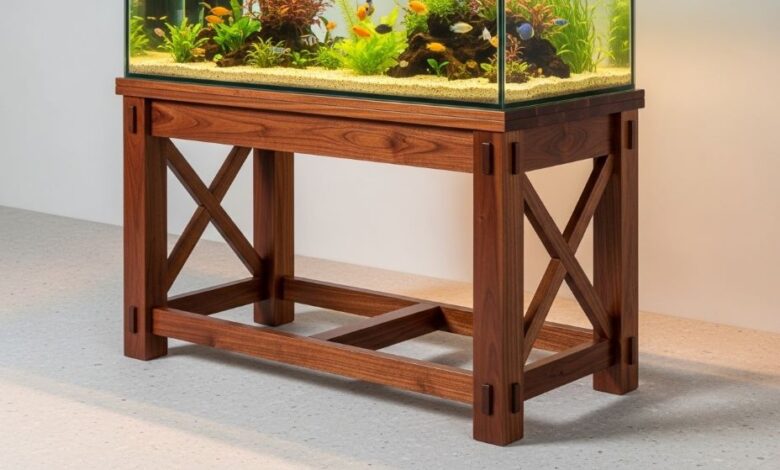
Solid construction starts with the frame. Look for stands with thick vertical supports at each corner. These columns bear most of the weight and must be substantial. Thin posts or widely spaced supports indicate a weak design that may fail under heavy loads.
Cross-bracing adds critical stability. The best stands include diagonal braces connecting the legs or horizontal supports connecting front to back and side to side. This bracing prevents the stand from racking or twisting, which can stress joints and lead to failure.
Top support is often overlooked but equally important. The surface where your tank sits should be solid and level. Some cheaper stands use thin plywood or particleboard tops that can sag over time. Quality stands feature thick tops with additional support underneath.
Water resistance matters even in budget options. At minimum, the stand should be finished with water-resistant paint or sealant. Better options use moisture-resistant materials or have sealed interiors that protect against humidity and spills.
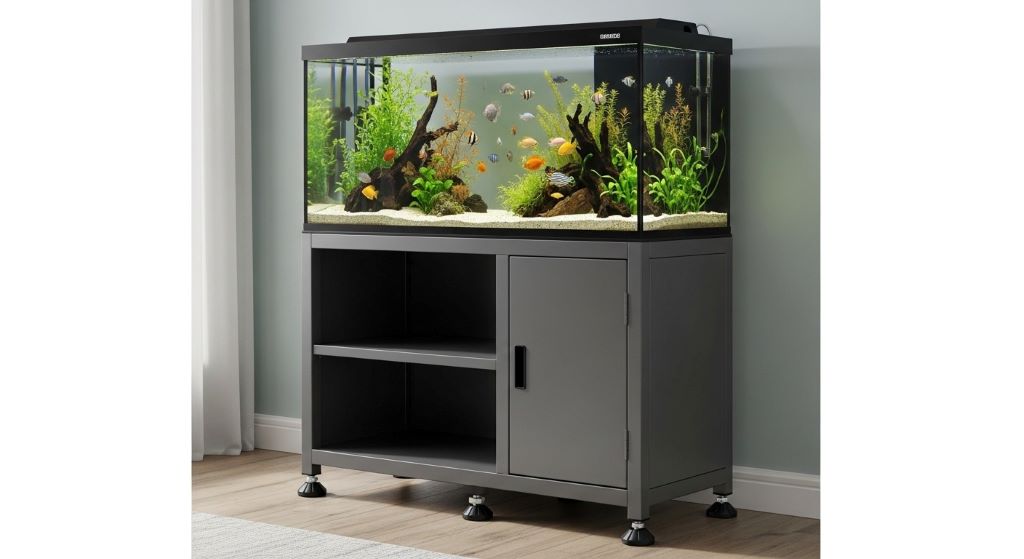
Level feet or adjustable levelers help you position the tank perfectly level. Even small variations in level can stress glass tanks and lead to leaks. Adjustable feet let you compensate for uneven floors without shimming.
Material Considerations for Budget Stands
Different materials offer various advantages and disadvantages. Understanding these trade-offs helps you make informed decisions when shopping on a budget.
Particle board is common in cheap aquarium cabinets because it’s inexpensive and easy to manufacture. However, it’s also the weakest and least water-resistant option. If you choose a particle board stand, ensure it’s properly sealed and reinforced. Never use unsealed particle board near water.
Medium-density fiberboard (MDF) is slightly better than particle board but still vulnerable to moisture. It’s denser and stronger, making it acceptable for budget stands if properly finished. Look for MDF stands with water-resistant coating on all surfaces, including the interior.
Plywood offers better strength and moisture resistance than particle board or MDF. Quality plywood stands can be quite affordable and provide excellent service for years. Marine-grade or pressure-treated plywood stands are ideal but may cost more.
Metal stands, particularly those made from steel tubing, provide excellent strength at reasonable prices. They resist moisture damage and can support tremendous weight. However, they may not include storage cabinets, which some aquarists prefer.
Solid wood stands are generally more expensive but occasionally appear on sale or as used options. They offer excellent strength and can be refinished if damaged. However, even solid wood needs proper sealing to resist water damage.
Where to Find Affordable Quality Stands
Knowing where to shop makes a significant difference in finding a budget fish tank stand without compromising safety. Different retailers offer various advantages depending on your priorities.
Pet store clearance sections often have discontinued stand models at steep discounts. These stands meet safety standards but may have cosmetic flaws or be from previous season’s designs. The quality remains high while the price drops significantly.
Online marketplaces provide extensive options at various price points. However, be cautious about extremely cheap imports that may not meet safety standards. Read reviews carefully and verify weight ratings before purchasing.
Used aquarium stands can offer tremendous value. Many aquarists upgrade or leave the hobby, selling quality stands for a fraction of their original cost. Inspect used stands carefully for water damage, structural issues, or instability before buying.
Big box hardware stores sometimes carry generic storage cabinets that work well as aquarium stands. These aren’t marketed for aquariums but may have appropriate dimensions and strength. Verify the weight rating and ensure the top is solid before using one.
Manufacturer outlets and online-only brands eliminate retail markups, offering quality stands at lower prices. These companies often provide detailed specifications and customer reviews that help you evaluate strength and quality.
Evaluating Stand Quality Before Purchase
Whether shopping online or in person, certain evaluation techniques help you identify quality construction even in budget-priced stands.
Check the weight capacity listed in the specifications. This number should significantly exceed your aquarium’s total weight. A good rule is choosing a stand rated for at least 1.5 times your expected load. This safety margin accounts for unexpected weight and manufacturing variations.
Examine the joints and connections. Quality stands use screws, bolts, or dowels rather than just glue. The connections should feel solid without wiggling or flexing. Loose joints indicate poor construction that will worsen over time.
Look at the finish quality. While cosmetic imperfections don’t affect strength, the finish does indicate overall manufacturing quality. Properly sealed edges, smooth surfaces, and even coating suggest attention to detail throughout construction.
Read customer reviews focusing on long-term durability. Reviews mentioning stands holding up well after months or years carry more weight than initial impressions. Pay particular attention to comments about sagging, warping, or water damage.
Compare dimensions carefully. Some budget stands save money by using thinner materials or smaller supports. Check that vertical posts are at least two inches square and that the top is at least half an inch thick for smaller tanks or three-quarters inch for larger setups.
DIY Options for Maximum Value
Building your own stand offers the best combination of affordability and strength. Even people with minimal carpentry experience can create safe, functional stands with basic tools and materials.
Simple designs using 2×4 lumber create incredibly strong stands at low cost. These basic frames use readily available materials and straightforward joinery. Plans are available free online for tanks of all sizes.
The materials for a DIY stand typically cost 30 to 50 percent less than comparable manufactured options. Additionally, you control every aspect of construction, ensuring quality and customizing features to your needs.
However, DIY stands require time, tools, and some skill. You must follow plans carefully and use appropriate joinery techniques. Poor construction can create dangerous stands that fail, so only attempt DIY if you’re confident in your abilities.
Consider semi-DIY approaches that modify existing items. For example, purchasing an inexpensive but sturdy metal workbench and adding a finished top creates a functional aquarium stand. This method combines the affordability of budget items with custom improvements.
Signs of Poor Quality to Avoid
Recognizing warning signs helps you avoid stands that seem affordable but compromise safety. These red flags indicate construction that won’t safely support your aquarium.
Excessive wobbling when you push on the stand suggests weak joints or insufficient bracing. Quality stands should feel rock-solid even when you apply moderate pressure. Any noticeable flex or movement indicates inadequate construction.
Thin vertical supports mean the stand can’t handle heavy loads. Posts less than 1.5 inches square for small tanks or 2 inches square for larger tanks will likely fail. Don’t trust your aquarium to stands with spindly legs.
Missing cross-bracing leaves the stand vulnerable to racking forces. Stands that rely solely on the cabinet sides for stability will weaken over time as joints loosen. Proper diagonal or horizontal bracing is essential.
Particle board without proper sealing will absorb moisture and weaken rapidly. Check that all surfaces, edges, and the interior are properly finished. Exposed raw particle board indicates a stand that won’t last.
Suspiciously low prices often indicate corners cut in materials or construction. If a stand costs significantly less than similar options, investigate why. The difference usually comes from inferior materials or poor manufacturing.
Modifications and Reinforcements
Sometimes you can find a cheap aquarium cabinet that needs minor improvements to be suitable. Simple modifications can transform a borderline stand into a safe option.
Adding cross-bracing to stands lacking it significantly improves stability. Simple diagonal braces made from 1×2 or 1×3 lumber connect opposing corners, preventing racking. This modification takes minimal time and materials.
Reinforcing the top prevents sagging on stands with thin tops. Adding a sheet of plywood underneath the existing top distributes weight better. Ensure any reinforcement sits level and fully supports the tank.
Sealing unsealed wood protects against moisture damage. Apply marine varnish, polyurethane, or specialized aquarium sealant to all surfaces. Pay extra attention to edges and the interior where moisture accumulates.
Installing adjustable feet improves leveling capability. Replace fixed feet with adjustable levelers available at hardware stores. This upgrade makes positioning your tank much easier and prevents stress on the glass.
Strengthening joints with additional hardware increases longevity. Add corner brackets, extra screws, or wood glue to existing joints. These reinforcements prevent loosening over time from the constant heavy load.
Maintenance for Long-Term Reliability
Even the best budget stand requires proper maintenance to remain safe over years of use. Regular care prevents problems and extends the stand’s useful life.
Check the level periodically, especially during the first few months after setup. Stands can settle slightly as joints compress under weight. Readjust leveling feet as needed to maintain perfect level.
Inspect for water damage during regular tank maintenance. Look for warping, swelling, discoloration, or soft spots indicating moisture intrusion. Address any water damage immediately before it compromises structural integrity.
Tighten hardware annually or whenever you notice any loosening. The constant weight can gradually loosen screws and bolts. A quick check and tightening session takes minutes and prevents problems.
Clean up spills immediately rather than letting water sit. Even water-resistant finishes can fail if water pools against them for extended periods. Quick cleanup protects your investment.
Monitor for sagging by measuring the distance from floor to the bottom of the tank periodically. Any increase in this measurement indicates the stand is weakening. Address sagging immediately by reinforcing or replacing the stand.
Sizing Your Stand Correctly
Getting the right size stand is crucial for both safety and aesthetics. Improper sizing creates stress points that can lead to failure.
The stand should match your tank’s footprint exactly. Some tanks have specific stand requirements due to their design. Rimless tanks particularly need full bottom support, while framed tanks may have more flexibility.
Never use a stand smaller than your tank. Overhanging glass creates stress points that can crack the tank. Additionally, the concentrated weight on a smaller area increases the pressure on the stand, making failure more likely.
A slightly larger stand is acceptable and even preferable in some cases. It provides a margin of error for placement and may offer additional stability. However, ensure the tank sits centered and doesn’t hang over any edges.
Consider the total footprint including equipment. Filters, protein skimmers, and other equipment often sit beside or behind the tank. Make sure your stand provides adequate space for everything you’ll need.
Account for access needs when sizing. You need room to reach behind the tank for maintenance and to access any cabinet storage. Stands that fit too tightly in their designated space create frustration during routine care.
Special Considerations for Large Tanks
Larger aquariums require extra attention when selecting a budget stand. The dramatic increase in weight makes quality even more critical.
For tanks over 75 gallons, compromising on stand quality becomes extremely risky. The tremendous weight demands robust construction. Consider allocating more of your budget to the stand and economizing elsewhere.
Check your floor’s load capacity before installing large tanks. Many homes can’t support 800-plus pounds concentrated in a small area without reinforcement. Consult a structural engineer if you have concerns about floor strength.
Large tank stands benefit from being positioned perpendicular to floor joists when possible. This orientation distributes weight across multiple joists rather than stressing one. In second-floor installations, this becomes especially important.
Consider professional installation for very large or expensive tanks. While this adds cost, professional aquarium installers ensure proper leveling and can identify potential problems before they cause disasters.
Balancing Aesthetics and Function
While strength and affordability are primary concerns, most people also want their aquarium stand to look decent. Fortunately, you can achieve all three goals with smart shopping.
Simple, clean designs often cost less than ornate stands while providing better strength. Straightforward construction uses materials efficiently and creates fewer weak points. Minimalist stands can look quite attractive while prioritizing function.
Paint or stain can dramatically improve the appearance of basic stands. A budget stand in raw or poorly finished wood can be transformed with quality paint. This approach lets you buy the strongest affordable option and customize the appearance.
However, don’t sacrifice structural features for decorative elements. Carved details, glass doors, and other aesthetic additions add cost without improving strength. Prioritize solid construction over pretty details in budget stands.
Consider how the stand integrates with your room’s decor. A mismatched stand might bother you even if it’s strong and affordable. Simple designs in neutral colors work with most decor styles.
Conclusion
Finding the best affordable aquarium stand requires balancing cost, strength, and quality. A sturdy tank stand doesn’t need to break your budget, but it must never compromise on safety. Understanding weight requirements, identifying quality construction, and knowing where to shop helps you make smart decisions.
Focus on key structural elements like solid vertical supports, adequate cross-bracing, and proper materials. Whether you choose a budget fish tank stand from a retailer, a cheap aquarium cabinet on sale, or a DIY option, prioritize features that ensure your tank’s safety. Remember that regular furniture won’t work, and extremely cheap stands often indicate dangerous corner-cutting.
Take time to evaluate options carefully, read reviews, and inspect construction quality. Consider modifications or DIY builds if you’re handy and want maximum value. Maintain your stand properly once installed to ensure it continues performing safely for years.
Your aquarium stand is a critical piece of equipment that protects your fish, your home, and your investment. Spending a bit more for quality construction or investing time in a DIY build pays dividends in peace of mind and long-term reliability. With the information in this guide, you can confidently find an affordable stand that keeps your aquarium safe without emptying your wallet.
Frequently Asked Questions
How much weight does my aquarium stand really need to support?
Calculate your tank’s total weight by multiplying gallons by 8.3 pounds, then adding 20 to 30 percent for the tank, substrate, decorations, and equipment. A 40-gallon tank weighs about 400 to 450 pounds total. Choose a stand rated for at least 1.5 times your calculated weight to ensure a safe margin. Never underestimate the weight, as doing so risks catastrophic failure.
Can I use a regular bookshelf or dresser as an aquarium stand?
No, regular furniture is not safe for aquariums. These pieces aren’t designed for the concentrated, continuous weight of an aquarium. Additionally, most furniture uses materials that deteriorate rapidly when exposed to moisture. The risk of failure, flooding, and damage far outweighs any money saved. Always use a purpose-built aquarium stand or properly constructed DIY option.
What’s the minimum I should spend on an aquarium stand?
This depends on tank size, but generally expect to spend 100 to 150 dollars for quality stands supporting up to 55 gallons. Larger tanks require proportionally more investment. DIY options can reduce costs to 50 to 75 dollars in materials while providing excellent strength. Avoid stands priced significantly below market average, as they likely compromise safety through poor materials or construction.
How can I tell if a used aquarium stand is still safe to use?
Inspect carefully for water damage, particularly swelling, warping, or soft spots indicating moisture intrusion. Check all joints for stability and tightness. Look for sagging in the top surface. Test the stand’s rigidity by pushing on it from different angles. If anything feels loose, wobbly, or shows water damage, don’t risk using it. Also verify the stand is rated for your tank’s size and weight.
Is it better to buy a cheap stand and reinforce it or buy a better one initially?
Generally, buying a quality stand initially is better. Reinforcing cheap stands requires time, skills, and materials that may cost as much as simply buying better quality. However, if you find a structurally sound but cosmetically flawed stand at significant discount, reinforcing or refinishing makes sense. Never attempt to reinforce stands with fundamental structural flaws like inadequate supports or damaged materials.
Related Topics:
Top Tools and Products for Sparkling Clean Reef Aquariums
Why do Aquarium Fish Have Faded Colors? Uncover the Causes and Solutions