


Transforming your outdoor space doesn’t require a fortune. Garden lovers at The Village Gardener have long understood that beauty and creativity flourish when resourcefulness meets imagination. Tin cans, often destined for recycling bins, can become stunning planters, decorative pieces, and functional garden art that adds character to any yard.
These simple containers offer endless possibilities for botanical displays. Additionally, they’re perfect for gardeners who want to experiment without significant investment. Whether you’re working with a sprawling backyard or a modest patio, tin-can projects provide flexibility and charm. Moreover, these creative diy garden projects on a dime allow you to express personal style while maintaining an eco-friendly approach to landscaping.
The beauty of tin-can gardening lies in its accessibility. Most households accumulate these containers naturally through everyday food consumption. Therefore, starting your botanical art journey requires minimal preparation and virtually no budget.
Preparing Your Tin Cans for Garden Use
Before diving into creative projects, proper preparation ensures longevity and plant health. Start by thoroughly washing each can with warm soapy water. Remove all labels and adhesive residue using a mixture of baking soda and cooking oil. This step prevents rust and creates a clean canvas for decoration.
Drainage is essential for healthy plants. Use a hammer and nail to create three to five holes in each can’s bottom. Space these holes evenly to allow water to escape freely. Without proper drainage, roots become waterlogged and plants quickly deteriorate.
Safety matters when working with metal edges. Many tin cans have sharp rims that can cause injuries. Carefully file down rough edges with sandpaper or a metal file. Alternatively, fold the top edge inward using pliers to create a smoother, safer rim. However, always wear protective gloves during this process.
Hanging Tin-Can Planters for Vertical Interest
Vertical gardening maximizes space while creating visual drama. Tin cans excel in hanging arrangements because they’re lightweight and durable. Drill or punch two holes near the rim on opposite sides. Thread sturdy wire, rope, or chain through these openings to create a secure hanging mechanism.
Arrange multiple cans at varying heights along fences, walls, or pergolas. This creates a cascading effect that draws the eye upward. Furthermore, staggered arrangements add depth and dimension to flat surfaces. Paint cans in coordinating colors or leave them natural for industrial charm.
Consider the plants you’ll display in hanging arrangements. Trailing varieties like string of pearls, trailing petunias, or sweet potato vine work beautifully. These plants spill over the edges, softening the metal containers and creating romantic, cottage-garden appeal. According to Better Homes & Gardens, container gardens offer flexibility for experimenting with different plant combinations throughout the seasons.
Painted Tin-Can Herb Gardens
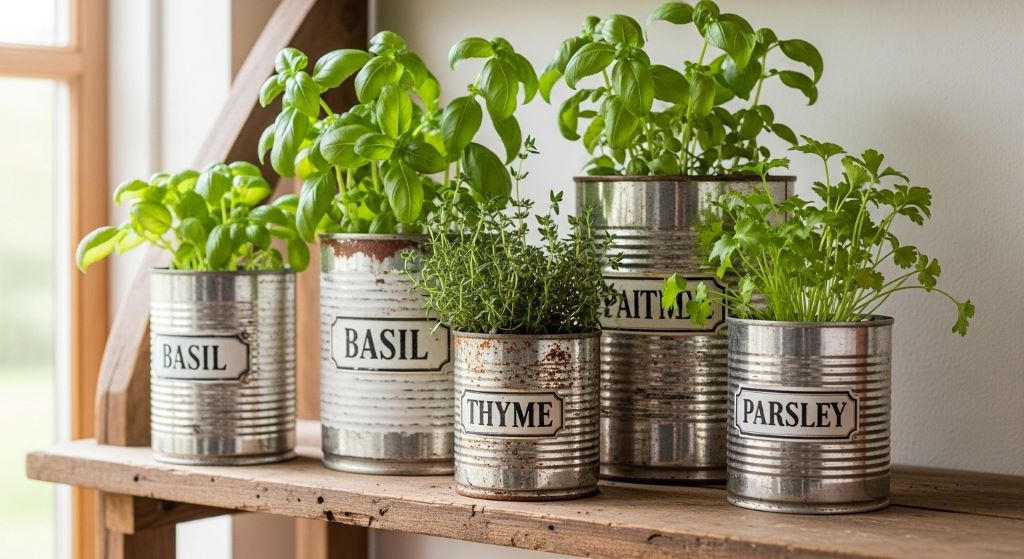
Herbs thrive in small containers, making tin cans ideal vessels. Create a dedicated herb garden using various can sizes arranged on a sunny windowsill, deck railing, or garden shelf. Paint each container with weather-resistant outdoor paint in colors that complement your home’s exterior.
Label each can with the herb name using stencils, chalkboard paint, or permanent markers. This organizational system looks attractive while serving a practical purpose. Additionally, grouping herbs by culinary use makes meal preparation more convenient.
Popular herbs for tin-can cultivation include basil, thyme, oregano, parsley, and chives. These varieties require minimal root space and produce abundantly in confined environments. Furthermore, harvesting fresh herbs from your tin-can garden reduces grocery expenses while elevating your cooking.
Rustic Tin-Can Luminaries
Garden lighting transforms outdoor spaces after sunset. Tin-can luminaries provide ambient illumination while showcasing artistic patterns. Use a nail and hammer to punch decorative designs into the can sides. Stars, flowers, geometric patterns, or custom designs create beautiful light displays.
Fill completed luminaries with sand or gravel for stability. Place battery-operated tea lights or small candles inside for safe illumination. Position these lights along pathways, on tables, or nestled among garden beds. The flickering light creates magical atmosphere during evening gatherings.
For added protection, spray luminaries with clear sealant to prevent rust. This extends their lifespan through multiple seasons. Moreover, storing them during harsh weather preserves their appearance and functionality.
Tiered Tin-Can Garden Displays
Create architectural interest with stacked or tiered arrangements. Secure larger cans as base supports, then attach smaller cans at various levels using strong adhesive or wire. This three-dimensional approach showcases more plants in compact footprints.
Tiered displays work exceptionally well for succulents, which require minimal water and maintenance. Arrange different varieties to create color and texture combinations. Additionally, these drought-tolerant plants forgive occasional neglect, perfect for busy gardeners.
Stabilize tiered structures by filling bottom cans with rocks or gravel before adding soil. This prevents tipping during windy conditions. Furthermore, strategic weight distribution ensures your botanical sculpture remains intact throughout the growing season.
Tin-Can Wind Chimes and Garden Art
Beyond planters, tin cans become decorative elements that add sound and movement. Create wind chimes by suspending painted cans at different lengths from a central frame. Add beads, buttons, or small bells for additional auditory interest.
Cut can sides into strips and bend them outward to create flower shapes. Paint these metal blooms in bright colors, then mount them on stakes or attach to garden structures. These permanent flowers never wilt and require no watering. The National Gardening Association notes that garden art personalizes outdoor spaces and reflects individual creativity.
Flatten cans completely and cut them into shapes for wall-mounted art installations. Birds, butterflies, letters, or abstract designs transform plain fences into gallery spaces. Therefore, your garden becomes an extension of your artistic vision.
Seasonal Tin-Can Decorations
Adapt tin-can projects to celebrate changing seasons. Spring arrangements might feature pastel-painted cans filled with daffodils or tulips. Summer displays showcase vibrant annuals in brightly colored containers. Fall brings opportunities for rust-colored cans planted with mums and ornamental grasses.
Winter decorations might include cans filled with evergreen branches, berries, and pinecones. Add battery-operated string lights for festive sparkle. Moreover, seasonal rotation keeps your garden fresh and engaging throughout the year.
Holiday-specific designs let you celebrate special occasions. Paint cans in patriotic colors for summer holidays, orange and black for Halloween, or metallic shades for winter celebrations. This versatility makes tin-can projects valuable for year-round garden interest.
Maintenance and Longevity Tips
Proper care extends the life of tin-can garden projects. Apply rust-resistant primer before painting to prevent deterioration. Choose high-quality outdoor paints designed to withstand weather exposure. Additionally, reapply sealant annually to maintain protection.
Monitor plants regularly for adequate moisture levels. Metal containers heat quickly in direct sunlight, potentially drying soil faster than traditional pots. Therefore, check moisture daily during hot weather and water accordingly.
Inspect hanging arrangements periodically to ensure wire or rope remains secure. Replace worn attachment materials promptly to prevent accidents. Furthermore, bring delicate projects indoors during severe weather to prevent damage.
Conclusion
Tin-can botanical art projects prove that remarkable gardens don’t require substantial budgets. These versatile containers transform from kitchen waste into charming planters, elegant luminaries, and creative decorations. Through simple preparation, thoughtful design, and regular maintenance, tin cans become valuable components of beautiful outdoor spaces.
The accessibility of these projects encourages experimentation and personal expression. Whether you’re crafting hanging gardens, herb collections, or decorative art pieces, tin cans offer unlimited creative potential. Moreover, the sustainable nature of repurposing materials aligns with environmentally conscious gardening practices.
Start collecting tin cans today and discover how everyday items become extraordinary garden features. Your yard will reflect your creativity while demonstrating that stunning landscapes grow from imagination rather than expense.
Frequently Asked Questions
What types of paint work best for tin-can garden projects?
Outdoor acrylic paint or spray paint designed for metal surfaces provides the best results. These paints resist fading, chipping, and weather damage. Always apply a rust-resistant primer first, then finish with a clear waterproof sealant for maximum durability.
Can tin cans rust if left outside permanently?
Yes, untreated tin cans will eventually rust when exposed to moisture and weather. However, proper preparation with primer, quality paint, and sealant significantly extends their lifespan. Many gardeners find that well-maintained tin-can planters last multiple seasons outdoors.
What plants grow best in tin-can containers?
Herbs, succulents, small annuals, and trailing plants thrive in tin cans. Choose varieties with shallow root systems that don’t require extensive space. Avoid plants that need deep soil or grow very large, as they’ll quickly outgrow these compact containers.
How do I prevent tin cans from getting too hot in summer sun?
Paint cans in light colors that reflect rather than absorb heat. Position them in areas with partial shade during the hottest part of the day. Additionally, use cans as decorative sleeves around plastic pots, creating air space that insulates plant roots.
Are tin cans safe for growing edible plants?
Modern food-grade tin cans are generally safe for growing herbs and vegetables. Ensure cans are thoroughly cleaned and haven’t contained toxic substances. If concerned, apply food-safe sealant to the interior or use cans only for ornamental plants.
Related Topics:
How to Clean White Stones in Garden: A Simple Guide
Creating a Pollinator-Friendly Garden: Planting for Bees and Butterflies