


Choosing the right pillow can make the difference between waking up refreshed and starting your day with neck pain and stiffness. For people who sleep on their backs, pillow selection becomes even more critical because the wrong choice can misalign your spine and create discomfort that extends beyond your neck.
Many back sleepers assume they need a soft, plush pillow that cradles their head. However, this common belief often leads to poor sleep quality and chronic pain. The reality is that back sleepers require specific support characteristics that maintain proper spinal alignment throughout the night.
This comprehensive guide will help you determine whether a firm pillow suits your sleeping style and body type. You’ll learn about the anatomy of sleep support, how to assess your current pillow, and what signs indicate you need to make a change. By understanding these factors, you can make an informed decision that improves your sleep quality and overall health.
Understanding Back Sleeping and Spinal Alignment
When you sleep on your back, your spine should maintain its natural S-curve. This curve includes a slight inward curve at your neck, an outward curve at your upper back, and another inward curve at your lower back. Your pillow plays a crucial role in supporting the cervical curve at your neck.
The space between your mattress and your head needs to be filled adequately to prevent your neck from either hyperextending backward or flexing too far forward. Both positions create muscle strain and can compress nerves or blood vessels. Therefore, proper support keeps your head at a neutral angle where your ears align with your shoulders.
Many people don’t realize that their sleeping position affects more than just their neck. Poor head support can influence shoulder tension, upper back discomfort, and even lower back pain. The body functions as an interconnected system, and problems in one area often manifest elsewhere.
Additionally, back sleeping offers several advantages when done correctly. This position distributes your weight evenly across your body, reduces pressure on joints, and can minimize facial wrinkles compared to side or stomach sleeping. However, these benefits only materialize with proper pillow support.
What Makes a Pillow Firm
Pillow firmness isn’t just about how the pillow feels when you press on it. The construction, materials, and density all contribute to the overall support characteristics. Understanding these elements helps you evaluate whether a firm option suits your needs.
A supportive pillow core provides the foundation for proper head and neck positioning. This internal structure maintains its shape throughout the night, preventing your head from sinking too deeply. Different materials create varying levels of firmness, and each has distinct characteristics.
High-density foam materials resist compression more effectively than lower-density alternatives. The density measurement indicates how much material is packed into a given volume. Higher density typically means the foam will maintain its shape better and last longer without developing permanent indentations.
Memory foam, latex, and polyurethane foam all come in various density levels. Dense materials provide firmer support by limiting how far your head sinks into the pillow. This resistance creates the support that back sleepers often need for proper alignment.
However, firmness exists on a spectrum rather than as an absolute quality. What feels firm to one person might feel medium to another based on their weight, neck length, and personal preferences. Therefore, understanding your specific needs is more important than following general guidelines.
Signs You Need More Support
Your body provides clear signals when your current pillow isn’t providing adequate support. Learning to recognize these signs helps you determine whether a firmer option might benefit you.
Waking up with neck stiffness or pain suggests your pillow isn’t maintaining proper alignment. If your neck feels sore specifically in the morning but improves throughout the day, your sleeping setup is likely the culprit. This pattern indicates that hours of poor positioning are straining your neck muscles.
Frequent headaches upon waking can result from nerve compression or muscle tension in your neck. When your head tilts at an unnatural angle all night, the muscles at the base of your skull work overtime to stabilize your head. This constant tension often manifests as morning headaches.
Shoulder discomfort in back sleepers sometimes stems from pillow problems rather than shoulder issues. When your pillow is too soft, your head tilts backward, which can create tension that radiates into your shoulders. A firmer pillow that prevents this backward tilt often resolves the shoulder pain.
Difficulty staying asleep might indicate you’re unconsciously adjusting your position to find comfort. If you wake frequently or toss and turn despite starting on your back, inadequate support could be forcing your body to seek more comfortable positions throughout the night.
Moreover, if you find yourself bunching up your pillow, folding it, or placing your arm under it for additional height, these behaviors signal that your pillow isn’t providing enough support on its own. You’re instinctively trying to create the firmness and height your body needs.
The Role of Body Type and Weight
Your physical characteristics significantly influence which pillow firmness works best for you. Two back sleepers might need completely different pillows based on their body composition and proportions.
Heavier individuals typically need firmer pillows because they create more compression. A pillow that feels medium-firm to someone weighing 130 pounds might feel quite soft to someone weighing 200 pounds. The additional weight compresses the pillow materials more, reducing the effective support.
Neck length also plays a crucial role in pillow selection. People with longer necks need more loft, which is the height of the pillow when compressed under your head. A firm pillow maintains this necessary height better than a soft one that collapses under pressure.
Shoulder width affects how much space exists between your head and the mattress. Broader shoulders create a larger gap that requires more pillow material to fill. While this factor matters more for side sleepers, back sleepers with very broad shoulders might also need slightly more loft than average.
Conversely, petite individuals or those with shorter necks might find that firm pillows push their heads too far forward. In these cases, a medium-firm option or a thinner firm pillow might provide better alignment. The key is matching the pillow’s resistance to your body’s needs.
Age-related changes can also affect your pillow requirements. As we age, our cervical discs lose some height, potentially changing the amount of support we need. Additionally, conditions like arthritis or previous injuries might make certain firmness levels more or less comfortable.
Testing a Firm Pillow for Fit
Before committing to a new firm pillow, you can perform several tests to determine if it provides appropriate support for your body. These evaluations help you make an informed decision rather than guessing.
The wall test offers a simple way to check alignment. Stand against a wall with your heels, buttocks, and shoulders touching the surface. Notice the natural position of your head and neck. When lying on your back with your new pillow, your head should maintain this same neutral position relative to your shoulders.
Have someone take a photo of you lying on your back with the pillow. Looking at the image from the side, your neck should maintain its natural curve without excessive tilting forward or backward. Your nose should point roughly toward the ceiling, not angled significantly toward your chest or the headboard.
The comfort duration test involves lying on the pillow for at least 15 minutes in the store or during a trial period at home. Initial impressions can be misleading. A pillow might feel comfortable for the first few minutes but create pressure points or discomfort over time. Extended testing reveals these issues.
Pay attention to where you feel the support. The pillow should support your neck more than the back of your head. If you feel most of the pressure on your skull with little support under your neck curve, the pillow might not be firm enough or properly shaped for back sleeping.
Consider your breathing comfort as well. A pillow that tilts your head too far backward can partially restrict your airway, making breathing feel slightly labored. Conversely, one that pushes your head too far forward can also affect breathing comfort. Proper alignment allows for easy, natural breathing.
Common Mistakes When Choosing Pillow Firmness
Many people make predictable errors when selecting a firm pillow. Avoiding these mistakes increases your chances of finding the right match on your first attempt.
Confusing firmness with thickness is a common error. A thick pillow isn’t necessarily firm, and a firm pillow isn’t always thick. You might need a thin firm pillow if you have a shorter neck, or a thick firm pillow if you have a longer neck. These are independent characteristics.
Buying based solely on price can lead to disappointment. While expensive doesn’t always mean better, extremely cheap pillows rarely provide the quality materials and construction needed for proper support. Additionally, premium materials like high-density foam typically cost more to produce, and this cost gets reflected in the retail price.
Ignoring trial periods and return policies means you’re stuck with your choice even if it doesn’t work. Many quality pillow manufacturers offer trial periods because they understand that finding the right pillow requires sleeping on it for several nights. Take advantage of these policies.
Expecting immediate comfort can set you up for disappointment. If you’ve been using a soft pillow for years, switching to a firm one requires an adjustment period. Your neck muscles need time to adapt to the new support pattern. Give a new pillow at least a week before deciding it’s not working.
Furthermore, neglecting to consider your mattress firmness leads to mismatched sleep systems. A very firm mattress combined with a very firm pillow might create too much rigidity, while a soft mattress with a firm pillow might not provide the comprehensive support your spine needs. The two elements should work together harmoniously.
Materials That Provide Firm Support
Different pillow materials create firmness through various mechanisms. Understanding these materials helps you choose based on more than just the firmness label.
Memory foam responds to heat and pressure, conforming to your shape while still providing support. High-density memory foam offers firm support by limiting how deeply you sink while still cushioning pressure points. It returns to its original shape slowly when you move, providing consistent support throughout the night.
Latex foam, whether natural or synthetic, tends to be more responsive than memory foam. It pushes back against your head more actively, creating a buoyant feeling. Latex is naturally firmer than most foam materials and maintains its support characteristics across a wide temperature range.
Polyurethane foam serves as the core for many firm pillows. When manufactured at high density, it provides excellent support at a lower cost than memory foam or latex. However, quality varies significantly between manufacturers, so density specifications matter more than the material name alone.
Buckwheat hulls create an entirely different type of firm support. These pillows conform to your shape while maintaining substantial resistance to compression. You can often adjust the fill quantity to fine-tune the firmness level. However, they make noise when you move and feel very different from foam options.
Down alternative or polyester fill can create firm pillows when packed densely, but these materials tend to shift and lose their shape more quickly than foam options. They also compress more over time, requiring fluffing and eventually replacement sooner than foam alternatives.
Adjusting to a Firmer Pillow
Transitioning from a soft pillow to a firm one requires patience and proper technique. Understanding what to expect makes the adjustment period more manageable.
The first few nights might feel uncomfortable simply because the support pattern differs from what you’re accustomed to. Your neck muscles have developed specific patterns based on your old pillow, and they need time to adapt. Mild stiffness during this transition is normal and typically resolves within a week.
Gradual transitions can ease the adjustment. Some people alternate between their old and new pillows every other night for the first week. This approach lets your body adjust more slowly, though it extends the overall adaptation period.
Proper sleeping position becomes even more important with a firm pillow. Ensure you’re truly sleeping on your back rather than at an angle. Your head should be centered on the pillow, and your shoulders should rest on the mattress, not on the pillow. Common positioning errors become more noticeable with firmer support.
Additionally, pay attention to what happens throughout the night. If you consistently wake up having pushed the pillow away or shifted to sleeping without it, the pillow might be too firm for your needs. However, if you wake up in the same position you fell asleep in and feel rested, you’re likely adjusting well.
Keep a sleep journal during the transition period. Note any changes in sleep quality, morning stiffness, headaches, or overall comfort. This record helps you objectively assess whether the firm pillow is improving your sleep or creating new problems.
When Firm Might Be Too Firm
While many back sleepers benefit from firm pillows, it’s possible to go too far in that direction. Recognizing the signs of excessive firmness prevents trading one problem for another.
If you develop new pain that didn’t exist with your previous pillow, the new one might be too firm. This includes pressure points on the back of your head, increased shoulder tension, or a feeling that your neck is being pushed forward unnaturally. These signals suggest the pillow is too resistant.
Difficulty falling asleep can indicate that your pillow is uncomfortably firm. While an adjustment period is normal, you should still be able to relax and fall asleep within a reasonable time. If you find yourself constantly repositioning or feeling unable to relax, the firmness level might not suit you.
Feeling like your head is perched on top of the pillow rather than cradled by it suggests excessive firmness. Your pillow should support you while still providing some conforming comfort. A pillow that feels like a brick under your head is counterproductive.
Moreover, if you consistently wake up with your head off the pillow or with additional items bunched under your head, you might be unconsciously trying to modify an overly firm pillow. Your body instinctively seeks comfort during sleep, and these behaviors indicate dissatisfaction with your current setup.
Maintaining Your Firm Pillow
Proper care extends the life of your pillow and maintains its supportive properties. Different materials require specific maintenance approaches.
Regular cleaning prevents allergen buildup and keeps your pillow fresh. Most foam pillows cannot be machine washed, but their covers can be removed and laundered. Follow manufacturer instructions carefully, as improper washing can damage supportive materials.
Fluffing and rotating your pillow helps prevent uneven wear patterns. Even firm pillows can develop compression in the areas where you rest your head most frequently. Rotating the pillow end-to-end and flipping it over distributes wear more evenly.
Proper pillow protectors shield against moisture, oils, and dust mites without significantly affecting firmness. Choose protectors specifically designed for your pillow type. Some materials, particularly memory foam, can be damaged by excessive moisture.
Storage considerations matter if you rotate between multiple pillows. Store unused pillows in a cool, dry place away from direct sunlight. Avoid compressing foam pillows during storage, as this can damage their internal structure and reduce their supportive qualities.
Therefore, know when to replace your pillow. Even high-quality firm pillows eventually lose their supportive properties. Most foam pillows should be replaced every two to four years, depending on quality and usage. If your pillow develops permanent indentations or no longer springs back to shape, it’s time for a replacement.
Special Considerations for Back Sleepers
Beyond basic firmness, several other factors affect whether a pillow works well for back sleepers specifically.
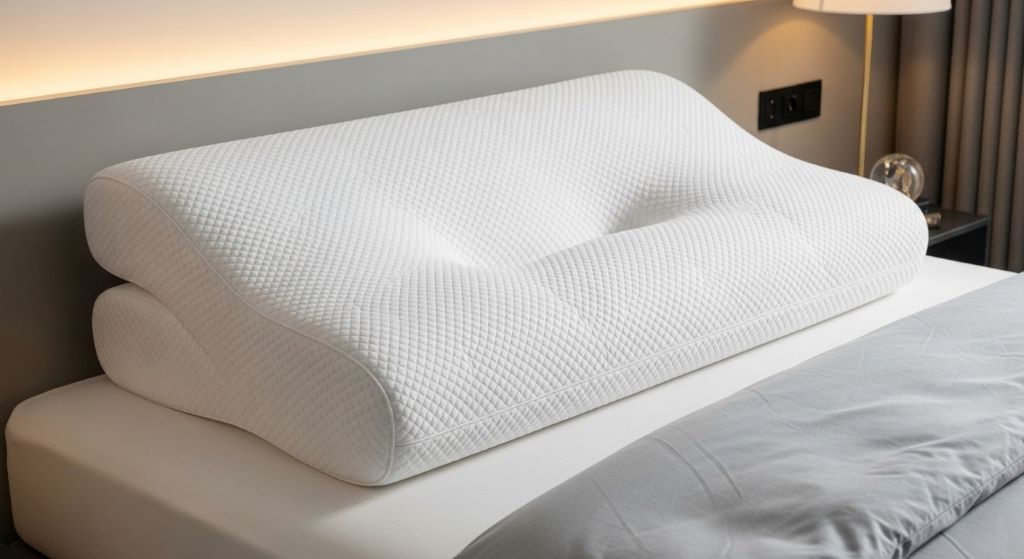
Contoured or cervical pillows feature special shapes designed to support the neck’s natural curve. These designs work particularly well for back sleepers, as they provide targeted support where it’s needed most. The raised edges cradle your neck while a depression in the center accommodates your head.
Cooling properties matter if you tend to sleep hot. Some firm materials, particularly dense foam, retain heat. Look for pillows with cooling gels, ventilated designs, or breathable covers if temperature regulation concerns you. Overheating can disrupt sleep regardless of how well the pillow supports your neck.
Adjustable loft features allow you to customize the pillow’s height. Some firm pillows include removable layers or inserts that let you fine-tune the support level. This adjustability is particularly valuable if you’re unsure exactly how much loft you need.
Additionally, consider noise levels. Some pillow materials, particularly buckwheat or certain synthetic fills, make rustling sounds when you move. These noises might not bother you initially but could become annoying over time, especially if you move frequently during sleep.
Conclusion
Determining whether a firm pillow is right for you as a back sleeper involves assessing multiple factors beyond simple preference. Your body type, neck length, current symptoms, and mattress firmness all influence which pillow provides optimal support. A supportive pillow core and high-density foam materials typically offer the durability and resistance needed to maintain proper spinal alignment throughout the night.
Pay attention to your body’s signals. Morning stiffness, headaches, and the need to constantly adjust your pillow all suggest your current setup isn’t providing adequate support. However, transitioning to firmer support requires patience, as your body needs time to adapt to the new sleeping surface.
Remember that firmness exists on a spectrum, and finding your ideal level might require trying several options. Take advantage of trial periods and return policies to test pillows in your actual sleeping environment. What feels comfortable in a store might not work for eight hours of sleep.
The right pillow is an investment in your health and sleep quality. While firm pillows aren’t universally appropriate for all back sleepers, many people find that increased support dramatically improves their sleep and reduces pain. By understanding the principles of spinal alignment and your individual needs, you can make an informed decision that leads to better rest and healthier mornings.
Frequently Asked Questions
How long does it take to adjust to a firm pillow?
Most people need between three to seven days to adjust to a firmer pillow. During this period, you might experience mild discomfort as your neck muscles adapt to the new support pattern. However, if pain worsens or persists beyond two weeks, the pillow might be too firm for your needs. Give your body adequate time to adjust, but don’t ignore signals that something isn’t working correctly.
Can a firm pillow help with snoring?
A firm pillow can potentially reduce snoring by maintaining better airway alignment. When your head tilts too far backward on a soft pillow, your airway can partially collapse, leading to snoring. Proper support keeps your head in a neutral position that promotes open airways. However, snoring has multiple causes, and a pillow change alone might not resolve the issue completely.
Should I use two pillows if I’m a back sleeper?
Generally, back sleepers should use only one pillow to maintain proper spinal alignment. Stacking two pillows typically pushes your head too far forward, creating the same misalignment issues that overly soft pillows cause. If one pillow doesn’t provide enough height, look for a single thicker or firmer pillow rather than doubling up. The exception might be placing a small pillow under your knees to reduce lower back strain.
How do I know what density foam I need?
Foam density is measured in pounds per cubic foot. For firm support, look for memory foam with a density of at least four pounds per cubic foot, or latex foam around five pounds per cubic foot. Higher densities generally provide firmer support and better durability. However, density should be considered alongside your body weight and personal comfort preferences. Heavier individuals typically benefit from higher-density materials.
Will a firm pillow fix my neck pain?
A firm pillow can significantly improve neck pain caused by poor sleeping posture and inadequate support. However, not all neck pain stems from pillow problems. If your pain persists despite using a properly supportive pillow, or if you experience pain throughout the day unrelated to morning stiffness, consult a healthcare provider. Underlying conditions like arthritis, disc problems, or muscle injuries require professional evaluation and treatment.
Related Topics:
Why the Momcozy Breastfeeding Support Pillow Is a Must-Have
Best U-Shaped Pillow for Pregnancy Sleep: Affordable Comfort for Expecting Moms